

Hi there,
I break down what works on LinkedIn so you can create content that resonates.
In this issue, you’ll find:
Why nobody’s reading your posts (it’s not the algorithm)
TOGETHER WITH POSTHERO
Grow your audience faster on LinkedIn. With an AI-powered tool that helps you create content and grow on LinkedIn.
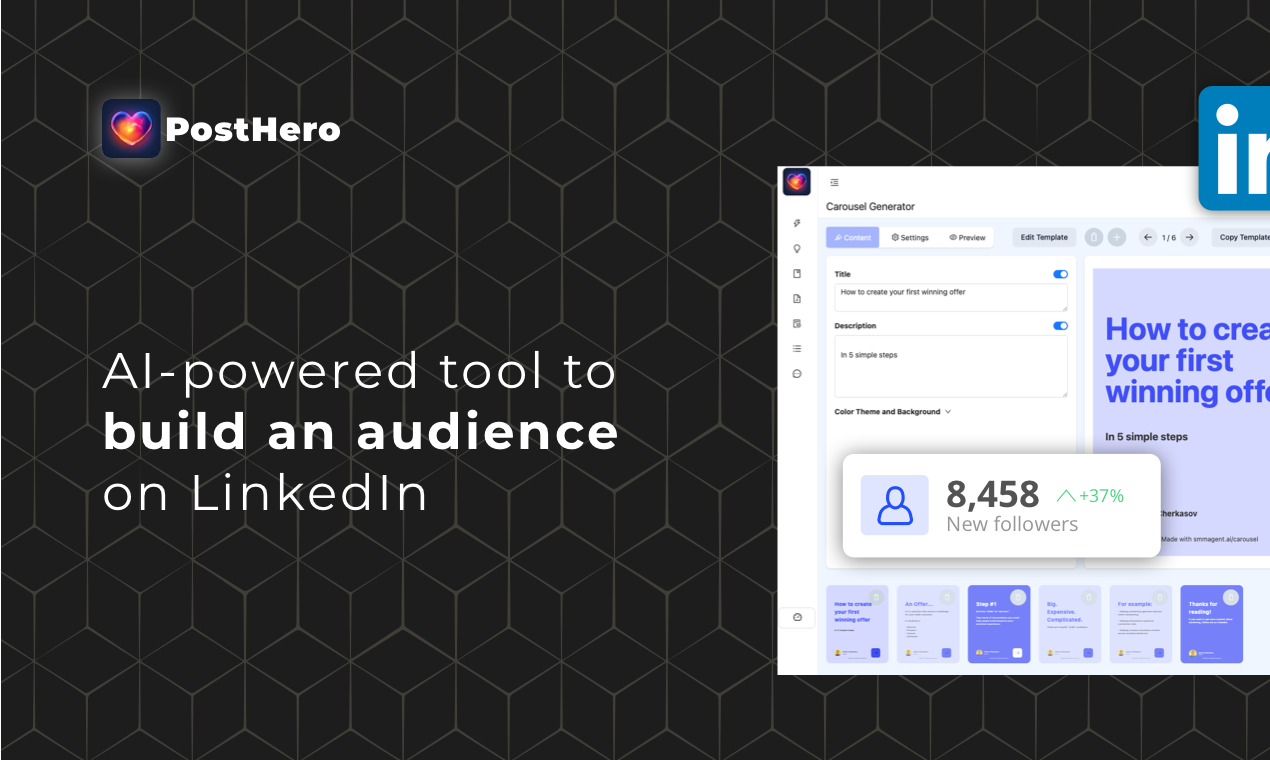
Create high-converting content that helps you grow on LinkedIn
Create a weekly content in 76 seconds
AI Voice assistant for creating content in seconds
Why nobody’s reading your posts (it’s not the algorithm)
“The algorithm is broken.”
“LinkedIn is suppressing my reach.”
“My posts used to do well. Now nothing works.”
I hear this every week.
And I get it. It’s frustrating. You put effort into your content. You hit publish. And... crickets.
So you blame the algorithm. It’s the easy answer.
But here’s the truth:
The algorithm isn’t your problem.
Your posts are.
I know that’s hard to hear. But once you accept it, you can actually fix it.
I’ve reviewed hundreds of posts that flopped. They almost always have the same problems. Not algorithm problems. Writing problems. Strategy problems. Fixable problems.
Let me show you what’s really going on.
The Algorithm Excuse
Let’s get this out of the way.
Yes, the algorithm changes. Yes, reach fluctuates. Yes, some posts get unlucky.
But here’s what I’ve noticed:
The people who blame the algorithm usually have posts that wouldn’t perform on any platform.
Weak hooks. Unclear points. No structure. No reason to engage.
Meanwhile, others are growing just fine. Same algorithm. Different results.
The difference isn’t luck. It’s execution.
So let’s look at the real reasons your posts aren’t getting read.
Reason 1: Your Hook Is Weak
This is the #1 killer.
LinkedIn shows 2-3 lines before the “see more” button. If those lines don’t grab attention, nobody clicks.
Your post dies before it starts.
Bad hooks:
“I want to share some thoughts on leadership.”
“Today I’m going to talk about productivity.”
“Here’s something I’ve been thinking about.”
These are not hooks. They’re warm-up sentences. Delete them.
Good hooks:
“I got fired on a Monday. Best thing that ever happened.”
“Most LinkedIn advice is garbage. Here’s why.”
“I almost quit last month.”
One line. Punchy. Creates curiosity or tension.
If your hook doesn’t make someone stop scrolling, nothing else matters.
Reason 2: Your Re-Hook Is Missing
Most people focus on line 1 and forget lines 2-3.
Big mistake.
The re-hook is what keeps them reading after the initial curiosity.
Line 1 gets them in the room. Lines 2-3 slam the door shut.
Bad:
Line 1: “I failed 17 times before I succeeded.”
Line 2: “In this post, I’ll share what I learned.”
The re-hook killed the momentum. It’s boring. It tells me nothing new.
Good:
Line 1: “I failed 17 times before I succeeded.”
Line 2: “Number 12 almost made me quit forever.”
Now I need to know what happened. I’m clicking “see more.”
Every line should pull people to the next line. Especially the first three.
Reason 3: You Buried the Value
Some posts have great insights. But they’re buried in paragraph 7.
Nobody gets to paragraph 7.
Most people skim. They read the hook, scan the middle, and maybe read the end.
If your main point is hiding in the middle, they’ll miss it.
Fix: Put your best stuff early. Don’t save it.
Think of your post like a news article. Lead with the headline. Then explain.
Not: “Let me give you some context first...” (for 5 paragraphs)
Yes: “Here’s the thing that changed everything. Let me explain.”
Reason 4: You’re Writing Walls of Text
Big blocks of text are scary.
People scroll past them. They look like work.
LinkedIn is a mobile-first platform. People scroll with their thumbs. They skim.
If your post looks dense, it feels dense. Even if the content is good.
Fix: Short paragraphs. One to two sentences max.
White space is your friend.
Let your post breathe.
Like this.
Reason 5: Your Post Has No Structure
Good posts are easy to follow.
Bad posts wander. They jump from point to point. They confuse the reader.
Confused readers don’t engage. They scroll.
Fix: Use a clear structure.
Some options:
Hook → Story → Lesson → Question
Hook → Problem → Solution → CTA
Hook → List of points → Summary → P.S.
Know your structure before you write. It keeps you focused.
Reason 6: You’re Writing for Everyone
“This post is for anyone who wants to improve.”
No. This post is for no one.
When you write for everyone, you write for no one. The message becomes generic. Forgettable.
Fix: Write for one specific person.
Picture them. What’s their job? Their problem? Their goal?
Write directly to that person.
The more specific you are, the more people relate. Counterintuitive but true.
Reason 7: There’s No Reason to Comment
Engagement drives reach. Comments especially.
If nobody comments, LinkedIn shows your post to fewer people.
But most posts give no reason to comment.
They end with:
“Hope this helps!”
“Thanks for reading.”
“That’s all for today.”
Dead ends. Nothing to respond to.
Fix: End with a question. Make it easy to answer.
“What’s a mistake you’ve made that turned into a lesson?”
“Have you tried this?”
“Which of these resonates most?”
Invite the conversation. Don’t just end the post.
Reason 8: You’re Not Engaging After Posting
This one surprises people.
Posting isn’t enough. What you do in the first hour matters.
If you post and disappear, LinkedIn thinks nobody cares. Reach drops.
If you reply to comments, add pinned comments, and engage with others, the post gets pushed.
Fix: Stay active for 30-60 minutes after posting.
Reply to every comment. Quickly. Keep the conversation going.
Your job isn’t done when you hit publish. It’s just starting.
Reason 9: Your Profile Is Confusing
This one’s sneaky.
People see your post. They’re intrigued. They click your profile.
And they find... a mess.
Unclear headline. No banner. Generic About section. No idea what you do.
They leave. They don’t follow. They don’t engage again.
Fix: Audit your profile. Make sure it’s crystal clear who you are, what you do, and who you help.
I covered this in detail in a previous newsletter: The Profile Audit Checklist. Check it out if you missed it.
Reason 10: You’re Not Posting Enough
Sometimes the problem is simple.
You’re not posting enough to get traction.
Once a week isn’t enough. The algorithm forgets you. Your audience forgets you.
Fix: Post 3-5 times per week minimum.
Consistency compounds. The more you show up, the more people see you.
You can’t build momentum with occasional posts.
The Real Problem
Here’s the uncomfortable truth.
The algorithm isn’t out to get you.
Your posts just need work.
And that’s actually good news. Because you can fix your posts. You can’t fix the algorithm.
Every problem I listed above is solvable. Today.
Better hooks. Clearer structure. Stronger endings. More consistency.
These aren’t secrets. They’re fundamentals.
Master the fundamentals and you’ll stop blaming the algorithm.
Your Homework
This week, do this:
Look at your last 5 posts that flopped.
Check each one against this list. Which problems do you see?
Rewrite one of them. Fix the hook. Fix the structure. Add a question at the end.
Post the new version. See what happens.
For your next post, write the hook first. Don’t move on until it’s great.
The algorithm isn’t your enemy.
Weak posts are.
Fix the posts. Watch the results change.
That’s it for this week.
If you figure out what was killing your posts, reply and let me know. I’d love to hear what you fixed.
See you next time.