

Hi there,
I explore what works on LinkedIn to help you craft content that connects.
In this issue, you’ll find:
The “Build in Public” Playbook for LinkedIn
TOGETHER WITH POSTHERO
Grow your audience faster on LinkedIn. With an AI-powered tool that helps you create content and grow on LinkedIn.
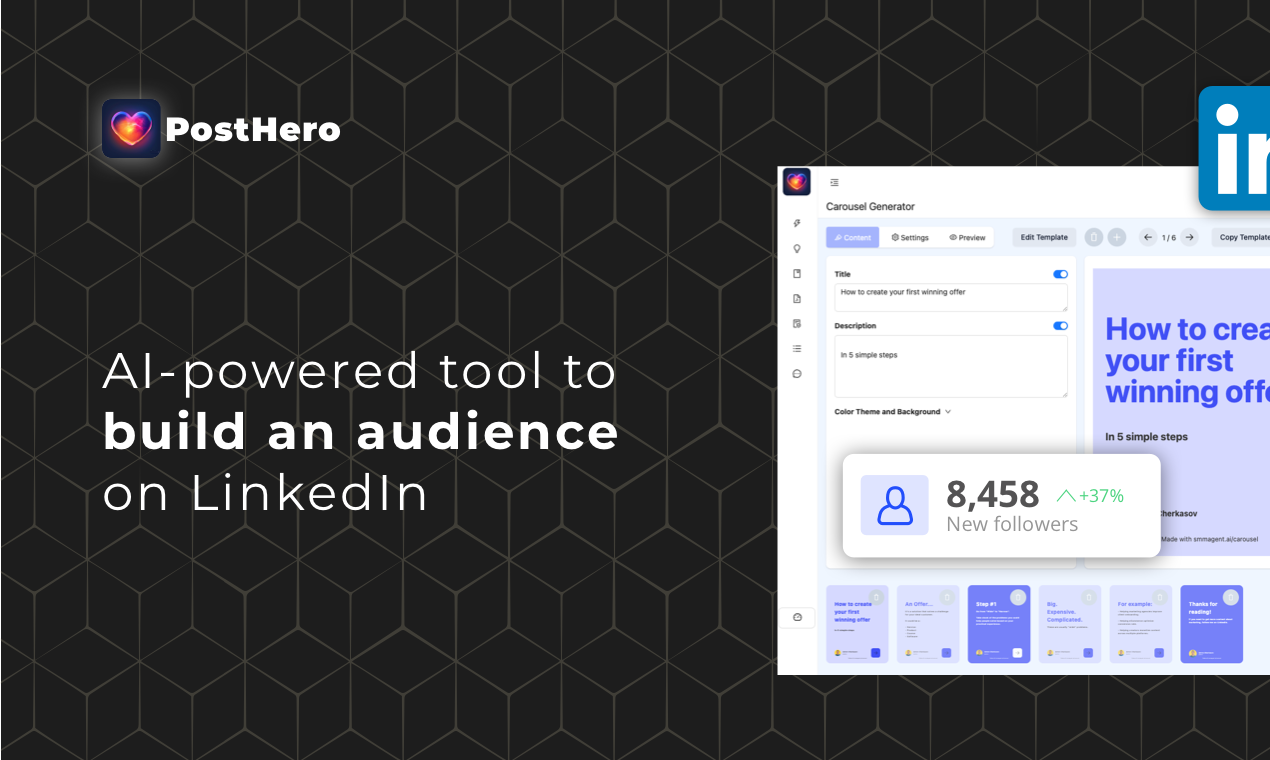
Create high-converting content that helps you grow on LinkedIn
Create a weekly content in 76 seconds
AI Voice assistant for creating content in seconds
The “Build in Public” Playbook for LinkedIn
“I don’t have anything to teach yet.”
“I’m not an expert. What would I even post about?”
“I’ll start posting when I have results to share.”
I hear this all the time.
People think they need to be successful before they can create content. They wait until they have the case studies. The credentials. The proof.
So they wait. And wait. And never start.
Here’s what they’re missing:
You don’t need to be at the finish line to create content. You can share the journey.
That’s building in public.
And it’s one of the most powerful strategies on LinkedIn right now.
What Is Building in Public?
Building in public means sharing your journey as it happens.
Not after you’ve made it. While you’re making it.
The wins. The losses. The lessons. The behind-the-scenes. The messy middle.
You’re not positioning yourself as a guru with all the answers. You’re positioning yourself as someone on the path, learning as you go.
And here’s the surprising thing:
People connect with this more than polished expertise.
Why? Because it’s relatable. Everyone is figuring things out. When you share your journey, people see themselves in you.
Why Building in Public Works
Three reasons:
1. It’s authentic.
People are tired of LinkedIn perfection.
The humble brags. The “I’m so grateful” posts. The carefully curated highlight reels.
Building in public is the opposite. It’s real. It’s messy. It’s human.
That authenticity cuts through the noise.
2. It builds trust over time.
When you share your journey, people watch you grow.
They see you struggle. They see you learn. They see you improve.
By the time you have something to sell, they already trust you. They’ve been on the journey with you.
That’s a warm audience. Not cold leads.
3. You create content from your real life.
No more staring at blank screens wondering what to write.
Your content comes from what you’re actually doing. What you tried. What worked. What didn’t.
Building in public solves the “what do I post about” problem forever.
What to Share (And What Not to Share)
This is where people get confused.
Building in public doesn’t mean sharing everything. It means sharing strategically.
What to share:
Projects you’re working on
Milestones and progress (even small ones)
Experiments you’re running
Lessons from failures
Behind-the-scenes of your process
Decisions you’re wrestling with
Tools and resources you’re using
Feedback you received and how you responded
Goals you’ve set and progress toward them
What NOT to share:
Personal drama that doesn’t serve your audience
Client confidential information
Complaints without lessons
Constant negativity
Anything you’d regret in 5 years
The filter: Would my ideal audience find this valuable or interesting?
If yes, share it. If not, keep it private.
The Build in Public Framework
Here’s a simple framework for turning your journey into content.
1. The Goal Post
Share what you’re working toward.
“I’m building a newsletter about LinkedIn growth. My goal is 1,000 subscribers by the end of the year.”
“I’m trying to land 5 new clients this quarter through LinkedIn content only.”
“I want to post every day for 30 days straight. Here’s why.”
This sets the stage. People know what to follow along for.
2. The Progress Post
Share updates on how it’s going.
“Week 4 of posting daily. Here’s what I’ve learned so far.”
“Just hit 500 newsletter subscribers. Halfway to my goal.”
“Tried a new content format this week. The results surprised me.”
Progress posts keep people engaged. They’re rooting for you.
3. The Lesson Post
Share what you learned from a specific experience.
“I launched my first digital product. It flopped. Here’s what I’d do differently.”
“I changed one thing about my profile and my connection requests doubled.”
“I was mass-rejected 50 times. Then I figured out what I was doing wrong.”
Lesson posts are valuable. They teach through your experience.
4. The Behind-the-Scenes Post
Show the process, not just the result.
“Here’s how I write a LinkedIn post in 15 minutes.”
“My morning routine for content creation.”
“What my weekly LinkedIn workflow actually looks like.”
Behind-the-scenes posts make you relatable. People love seeing how things actually work.
5. The Failure Post
Share what went wrong. And what you learned.
“I just lost my biggest client. Here’s what I’m taking from it.”
“My launch flopped. 3 things I’d do differently.”
“I made this mistake for 6 months before someone told me.”
Failure posts build trust. They show you’re honest and self-aware.
6. The Milestone Post
Celebrate wins. Big and small.
“Just hit 1,000 followers. Here’s what got me here.”
“Landed my first client from LinkedIn. Here’s exactly how it happened.”
“6 months of posting. Here’s what changed.”
Milestone posts inspire others. And they show your progress is real.
Real Examples
Let me show you what building in public looks like in practice.
Example 1: The Goal Post
“I’m starting a challenge.
30 posts in 30 days.
I’ve been inconsistent for months. Time to fix that.
I’ll share what I learn along the way. The wins. The struggles. What works.
Follow along if you want. Day 1 starts tomorrow.
Who wants to join me?”
Example 2: The Lesson Post
“I changed my headline 3 weeks ago.
Old headline: ‘Marketing Consultant’
New headline: ‘I help B2B founders turn LinkedIn into a lead machine’
Since then:
Profile views up 47%
Connection requests doubled
3 inbound leads
Small change. Big difference.
What does your headline say about you?”
Example 3: The Failure Post
“I sent 50 cold DMs last month.
Responses: 2
Meetings booked: 0
What went wrong:
I was pitching too fast
Zero personalization
No warm-up before reaching out
I’m switching to warm outreach only. I’ll report back in 30 days.
Has anyone else struggled with cold DMs?”
Example 4: The Behind-the-Scenes Post
“Here’s my actual content creation process:
Sunday: Brain dump 10 ideas into Posthero
Monday-Friday: Turn 1 idea into a post each morning (15 min)
Saturday: Review what worked, save ideas for next week
That’s it. No complex system. No content calendar.
Just show up and write.
What’s your process?”
The Mindset Shift
Building in public requires a mindset shift.
You have to be okay with:
Sharing before you’re “ready”
Being wrong sometimes
Showing imperfection
Not having all the answers
This is uncomfortable at first. But it gets easier.
And the connection you build with your audience is worth it.
People don’t follow perfect. They follow real.
Common Mistakes to Avoid
1. Being too vague.
“Working on some exciting stuff!” tells me nothing.
Be specific. What are you working on? What’s the goal? What happened?
Specificity makes content interesting.
2. Only sharing wins.
If every post is a celebration, people stop believing you.
Share the struggles too. That’s what makes the wins meaningful.
3. Making it all about you.
Building in public isn’t a diary. It needs to be valuable to your audience.
Ask yourself: What can they learn from this? What’s in it for them?
4. Sharing too much personal stuff.
Your audience doesn’t need to know everything.
Keep it relevant to your work, your niche, your journey. Not your personal drama.
5. Quitting too early.
Building in public is a long game. You won’t see results in 2 weeks.
Give it 6 months minimum. Consistency is everything.
Your Homework
This week, try this:
Pick one thing you’re working on right now. A goal, a project, a challenge.
Write a “Goal Post” sharing what you’re trying to do and why.
Commit to sharing 1 update per week on your progress.
When something goes wrong, share the lesson. When something goes right, share the milestone.
After 30 days, notice how your audience engages differently.
You don’t need to be an expert to create content.
You just need to be on a journey.
And share it.
That’s it for this week.
If you start building in public, reply and tell me what you’re working on. I’d love to follow along.
See you next time.
That’s a wrap for today.
See you next week! If you want more LinkedIn tips, be sure to follow me on LinkedIn (link).
If you love this episode and want to support us, spread the word about us by sharing The LinkedIn Secrets with colleagues. I really appreciate it!
Thank you for reading!
What’d you think of today’s edition?
Help me to understand what you think about this episode. Just reply with a number (1, 2, or 3) to this email.
1 - Damn good
2 - Meh, do better
3 - You didn’t cook it
Your compadre,
Anton “LinkedIn growth strategies” Cherkasov