

Hi there,
I uncover what works on LinkedIn so you can create content people engage with.
What’s hot this week: OpenClaw is still trending. More and more people are posting tips and use cases for creating LinkedIn content with it.
OpenClaw is the most advanced AI assistant framework, and you can try it without code using this 1-click setup on ClawPlane.
In this issue, you’ll find:
The “Reply Guy” strategy done right (without looking desperate)
TOGETHER WITH POSTHERO
Grow your audience faster on LinkedIn. With an AI-powered tool that helps you create content and grow on LinkedIn.
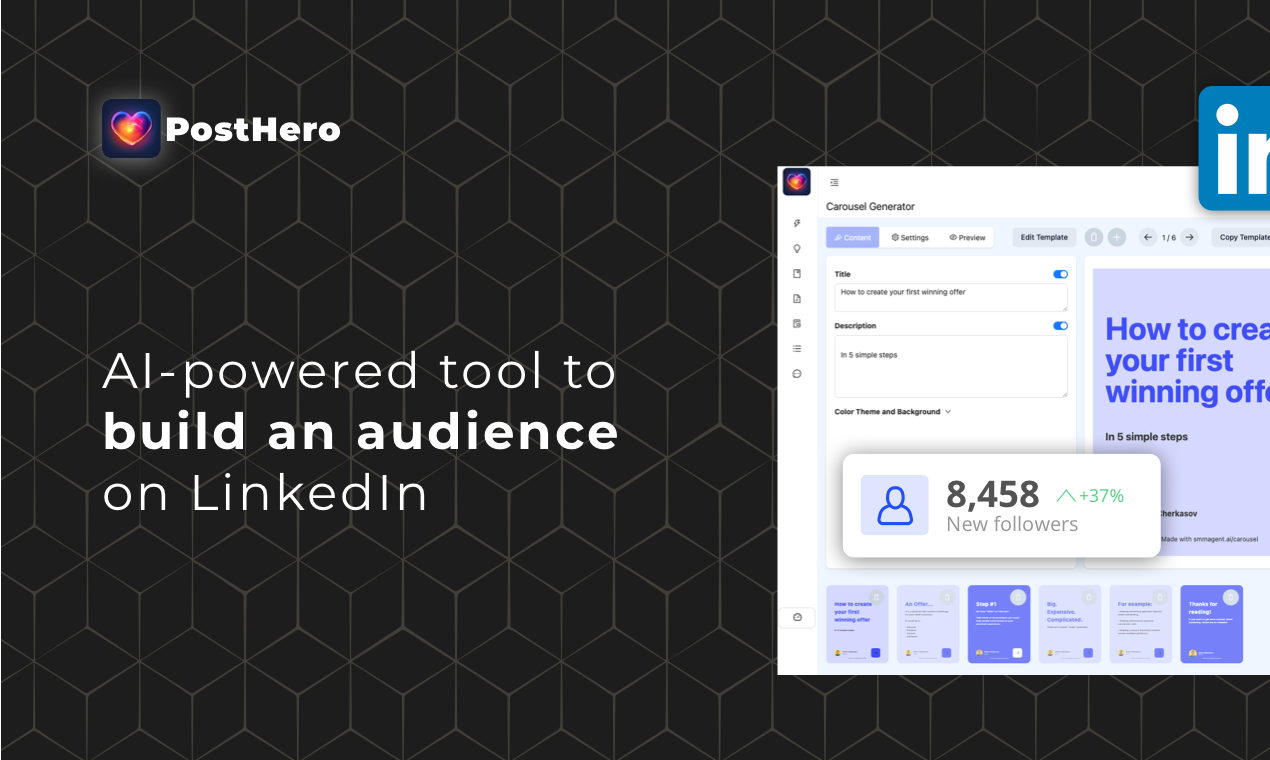
Create high-converting content that helps you grow on LinkedIn
Create a weekly content in 76 seconds
AI Voice assistant for creating content in seconds
The “Reply Guy” Strategy Done Right (Without Looking Desperate)
You know that person who comments on everything?
“Great post!”
“Love this!”
“So true 👏”
Under every single post. From everyone. Multiple times a day.
That’s the “Reply Guy.” And everyone hates them.
Not because they comment. But because their comments are useless.
They’re not adding value. They’re not starting conversations. They’re just... there. Visible. Desperate for attention.
But here’s the thing:
The strategy itself isn’t broken. The execution is.
Commenting on other people’s posts is one of the best ways to grow on LinkedIn. It gets you in front of new audiences. It builds relationships. It shows up in feeds.
You just have to do it right.
Let me show you how to be a “Reply Guy” without looking desperate.
The Difference Between Spam and Value
Here’s how you can tell if a comment is spam:
If you deleted the comment, would anyone notice?
If the answer is no, it’s spam.
“Great post!” — spam.
“Love this!” — spam.
“Thanks for sharing!” — spam.
These comments don’t add anything. They’re just noise.
The post author ignores them. Other readers scroll past them. The algorithm barely registers them.
Now compare that to this:
“This reminds me of when I tried the same approach last year. Worked great for the first 3 months, then engagement dropped. Turns out I was optimizing for the wrong metric. Curious if you’ve seen this pattern too?”
That’s a comment.
It adds perspective. It asks a real question. It starts a conversation.
If you deleted it, people would notice. The discussion would lose something.
That’s the difference.
How to Pick Which Posts to Comment On
You can’t comment on everything. You’ll burn out. And you’ll look desperate.
So you need a filter.
Here’s mine:
1. Only comment on posts from 4 types of people
Your ideal clients. People you actually want to work with. Engage with their posts to stay on their radar.
Creators who attract your ideal clients. Their audience is your audience. Show up in their comments to get discovered.
Peers at your level. Build relationships with people in your niche. Support each other.
Small creators. They remember who showed up early. This is relationship building for the long game.
Everyone else? Scroll past.
2. Only comment when you have something real to say
If your first instinct is “Great post!” - don’t comment.
Wait until you read a post and think: “Oh, that’s interesting. I have a take on this.”
That’s when you comment.
If you don’t have anything meaningful to add, just like it and move on.
3. Avoid posts that already have 100+ comments
Your comment will get buried. Nobody will see it. It’s wasted effort.
Instead, look for posts with 5-20 comments. That’s the sweet spot.
Early enough that your comment gets seen. Active enough that there’s real engagement happening.
The “Mini-Post” Comment Format
The best comments are mini-posts.
They’re not replies. They’re standalone pieces of content that happen to be in someone else’s comment section.
Here’s the structure:
1. React to the post (1-2 sentences)
Show that you actually read it. Reference something specific.
2. Add your perspective or experience (2-3 sentences)
Share your take. Tell a quick story. Offer a related insight.
3. Ask a question or make a point (1 sentence)
End with something that invites conversation or adds a new angle.
That’s it. Keep it tight. Keep it valuable.
Real Examples
The Post: “Most founders waste time on content that doesn’t convert. Here’s how to fix it...”
Bad comment:
“Great advice! Thanks for sharing 🙏”
Good comment:
“The conversion point is huge. I spent 6 months creating content that got views but zero clients. The shift happened when I stopped writing for ‘everyone’ and started writing for one specific person. Suddenly my DMs turned into actual calls. Do you find that niche-ing down feels scary at first for most people?”
See the difference?
The bad comment adds nothing. The good comment could be its own post.
Threading Strategies (When to Keep Going)
Sometimes a comment turns into a conversation.
The original poster replies. Other people jump in. You’ve got a thread going.
This is gold. But most people blow it.
Here’s how to handle threads:
1. Always reply to the author’s response
If the post author replies to your comment, reply back. Always.
This shows respect. It continues the conversation. And it increases the chances they’ll remember you.
2. Engage with other commenters (selectively)
If someone replies to your comment with something thoughtful, engage.
If someone just drops a “👏” or “Agreed!” — you can skip it.
3. Know when to take it to DMs
If the conversation gets deep or personal, move it to DMs.
Example:
You’re going back and forth about a specific strategy. After 2-3 replies, say:
“This is turning into a great conversation. Mind if I DM you to dig into this more? Would love to hear how you’re applying this.”
That’s how you turn a comment into a relationship.
4. Don’t dominate the thread
If you’ve replied 3-4 times in the same thread, stop.
You’re starting to look like the Reply Guy again. Let other people have space.
When to Stop Engaging
This is the part nobody talks about.
Knowing when to walk away.
Here are the signals:
1. The conversation is going in circles
If you’re saying the same thing in different ways, stop.
You’ve made your point. Move on.
2. Someone is being argumentative
If someone replies with “Actually, you’re wrong...” or starts nitpicking, don’t engage.
Just like their comment and move on. Don’t get pulled into a debate.
LinkedIn arguments make both people look bad.
3. Your comment got ignored
If you write a thoughtful comment and nobody reacts to it (no likes, no replies), that’s fine.
Don’t leave a second comment trying to get attention. That’s desperate.
Just move on to the next post.
4. You’ve engaged with this person 3+ times this week
If you’re constantly commenting on the same person’s posts, you’re becoming predictable.
Spread your engagement around. Don’t hover.
The Weekly Commenting System
Here’s how I structure my engagement:
Monday-Friday: 30 minutes of commenting per day
I set a timer. I scroll my feed. I leave 5-10 thoughtful comments.
That’s it. No more, no less.
Saturday-Sunday: No commenting
I take weekends off from engagement. I read. I don’t comment.
This keeps me from burning out. And it keeps my comments fresh.
The 80/20 split:
80% of comments on smaller creators and peers (5-20 comments on their posts)
20% of comments on bigger creators (100+ comments on their posts)
Why? Smaller posts = higher visibility for your comment. Bigger posts = potential for massive reach if your comment gets traction.
What Good Commenting Actually Gets You
Let’s be clear about why you’re doing this.
Commenting isn’t about “being nice” or “supporting the community.”
It’s a growth strategy.
Here’s what happens when you comment consistently:
1. People check out your profile
Every thoughtful comment is a mini-ad for your profile.
If someone reads your comment and thinks “This person gets it,” they click your name.
2. You build familiarity
When people see your name pop up in comments regularly, they start to recognize you.
By the time you DM them, you’re not a stranger anymore.
3. Your own posts get more engagement
The people whose posts you comment on will often return the favor.
It’s not guaranteed. But it happens enough to matter.
4. You get invited into conversations
When you consistently add value in comments, people start tagging you in posts.
“Hey @Anton, curious what you think about this...”
That’s when you know it’s working.
The Reply Guy Test
Before you hit “Post” on your next comment, ask yourself:
Would I send this comment if I was DMing this person directly?
Does this add something new to the conversation?
If someone read only my comment, would they get value from it?
If the answer to any of these is “no,” rewrite it or skip it.
Your comments are part of your brand.
Every “Great post!” makes you forgettable.
Every thoughtful comment makes you memorable.
Your Homework
This week, try this:
Step 1: Make a list of 10 people whose content you want to engage with regularly.
Mix of ideal clients, peers, and creators who attract your audience.
Step 2: Set a 20-minute timer each day.
Scroll through your feed. Leave 3-5 mini-post comments. Then stop.
Step 3: Track what happens.
How many profile views did you get? How many new connection requests? How many DMs?
See if thoughtful commenting moves the needle more than posting.
I bet it does.
That’s it for this week.
If you’ve been the “Great post!” person and want to level up your commenting game, reply and let me know. I’d love to hear what changes when you start treating comments like mini-posts.
See you next week!