

Hi there,
I break down top LinkedIn posts so you can craft content that resonates.
In this issue, you’ll find:
The 3 high-performing LinkedIn posts this week
Permission-based selling: how to DM without being sleazy
The 3 high-performing posts this week
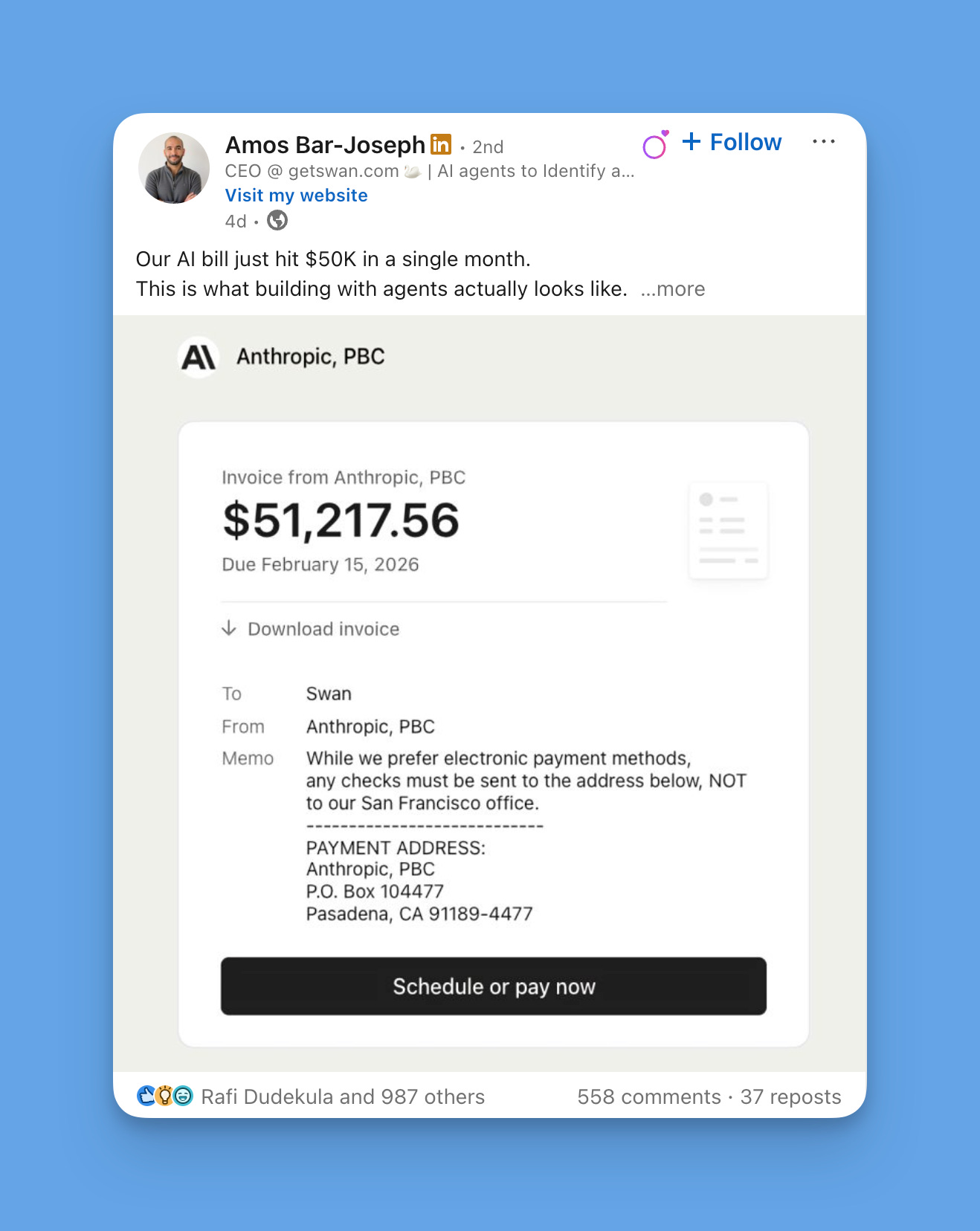
1. Our AI bill just hit $50K in a single month.
Why this post?
This post went viral, receiving 987 likes in 4 days. It received 13-17 times more reposts than other Amos’s posts this week.
WHY THIS POST WENT VIRAL
Everyone talks about AI agents in theory. This post shows what it actually costs to run a business on them.
BREAKDOWN
Shocking number hook: “$50K in a single month“ - makes you stop and read
Reality check frame: “This is what building with agents actually looks like” - cuts through the hype
Shows where the money goes: Support. Sales. Onboarding. Product. - proves it’s not waste, it’s infrastructure
Quotable insight: “Every part of the business now runs on intelligence - and intelligence isn’t free” - reframes cost as investment
Vulnerable honesty: “This number still makes me blink” - admits it’s uncomfortable even for him
Screenshot proof: Actual Anthropic invoice - undeniable, specific, real
TRY THIS
Share a real number that feels uncomfortable - invoices, costs, revenue - specificity builds trust
Frame a potential negative (big expense) as a positive signal (intelligence at scale)
Use screenshots of real documents - receipts beat claims every time
TOGETHER WITH POSTHERO
Grow your audience faster on LinkedIn. With an AI-powered tool that helps you create content and grow on LinkedIn.
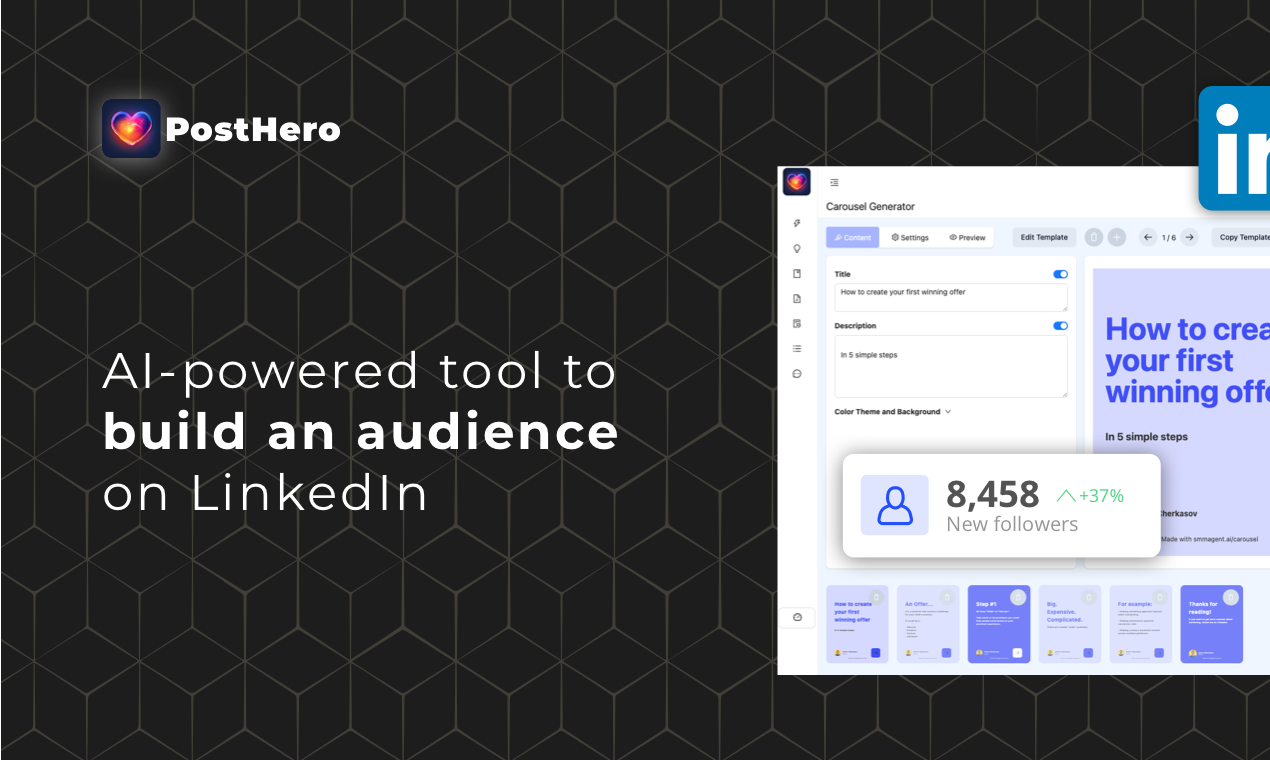
Create high-converting content that helps you grow on LinkedIn
Create a weekly content in 76 seconds
AI Voice assistant for creating content in seconds
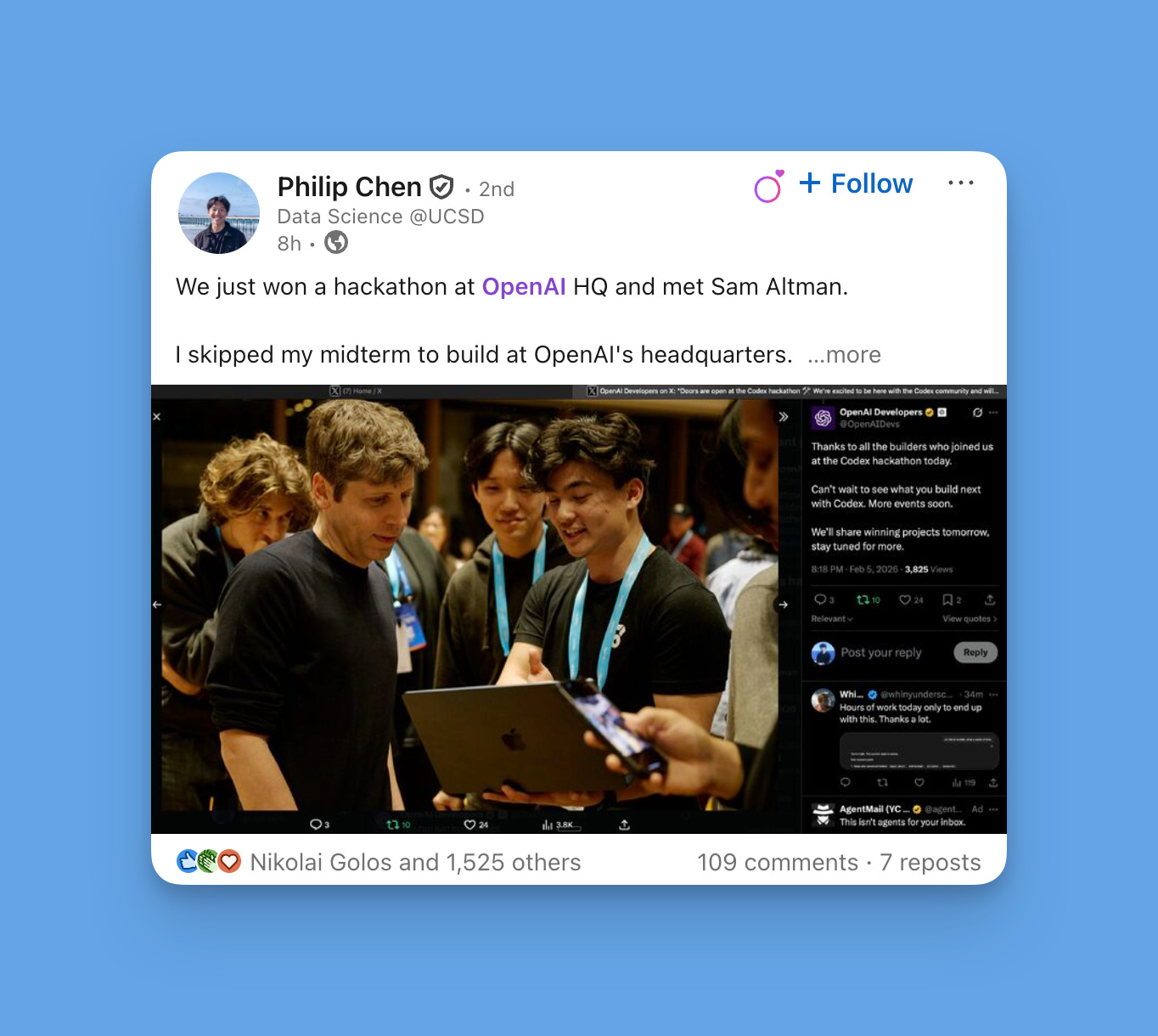
2. We just won a hackathon at OpenAI HQ and met Sam Altman.
Why this post?
Another post that went viral this week - it got almost 1.5 likes in 8 hours and performed 10 times better than Philip’s previous content.
WHY THIS POST WENT VIRAL
This post has everything: a young underdog (college student skipping a midterm), a prestigious venue (OpenAI HQ), a clear win ($10K prize), famous people (Sam Altman photo), and a genuinely impressive technical project explained simply.
BREAKDOWN:
Double hook: “Won a hackathon at OpenAI HQ and met Sam Altman” - two impressive things in one line
Relatable sacrifice: “I skipped my midterm” - college student energy, shows commitment, makes him rootable
Stakes and outcome: “Finalists out of hundreds of teams... winning $10,000” - context that makes the win impressive
Simple “how it works”: Five-step breakdown anyone can follow - paste URL, extract frames, auto-label, export dataset, train detector
Impact statement: “Days of painstaking manual labeling into a single repeatable pipeline which takes minutes” - shows the value
TRY THIS
Lead with your biggest win and your most famous interaction in the same sentence
Include a small personal sacrifice or risk that shows commitment - it makes you relatable
Tag everyone involved - teammates, judges, people you met - it expands reach and gives credit
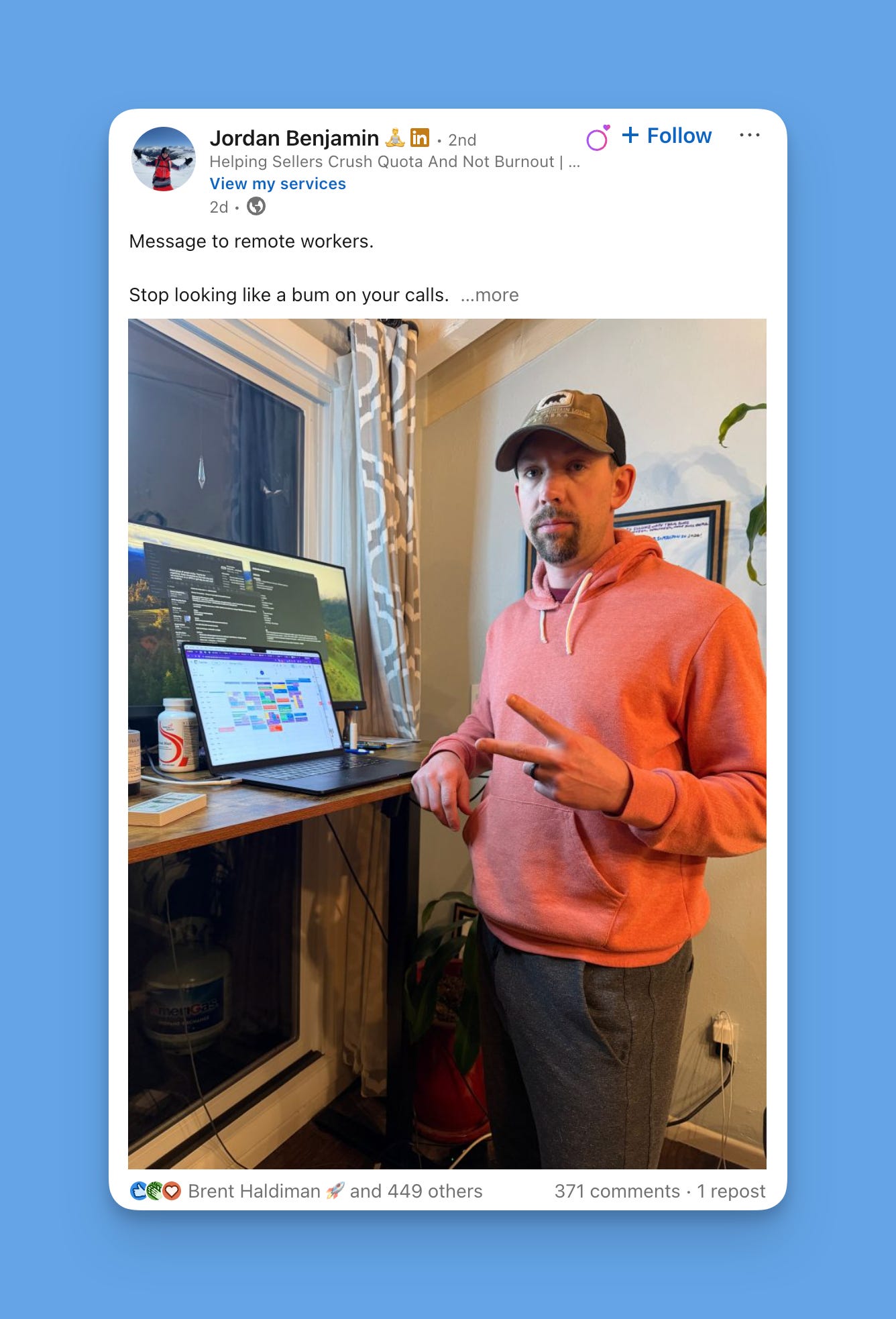
3. Message to remote workers.
Why this post?
This post got 7-10 times more comments than Jordan’s other posts this week.
WHY THIS POST WENT VIRAL
This post is designed to start a fight. “Stop looking like a bum” is the kind of statement that forces people to either defend their sweatpants or admit he has a point.
BREAKDOWN:
Direct address hook: “Message to remote workers” - calls out a specific audience immediately
Provocative statement: “Stop looking like a bum on your calls” - blunt, slightly offensive, impossible to ignore
Softens the take: “I’m all for tech bro casual gear. If you’re doing well and performing, great.” - shows nuance, not just judgment
Vivid example: “Looks like they should be a personal trainer and not a business growth consultant” - funny, specific, visual
Core principle: “There’s an element to look good feel good“ - simple truth underneath the hot take
TRY THIS
Start with a direct, slightly provocative statement - it forces people to keep reading
Add nuance so you don’t seem like you’re just judging everyone
Tie your advice to outcomes - “if you’re not performing, try this” is more useful than “do this”
LinkedIn Guide
Permission-Based Selling: How to DM Without Being Sleazy
“Hey Anton, love your content! Quick question - are you open to a conversation about how we can help you 10x your revenue?”
Delete.
“Hi! I noticed you’re a founder. I help founders like you scale. Here’s a 7-minute Loom video explaining how.”
Delete.
“Hey! Just wanted to reach out and see if you need help with your LinkedIn strategy. We’ve helped 500+ clients...”
Delete. Block. Report.
Sound familiar?
We all get these DMs. Every. Single. Day.
And we all hate them.
But here’s the thing: DMs actually work. They’re one of the best ways to start conversations and land clients on LinkedIn.
The problem isn’t DMs. The problem is HOW people send them.
Today I’m sharing a different approach. It’s called Permission-Based Selling (PBS).
No pitchslaps. No sleaze. No desperation.
Just real conversations that lead to real opportunities.
Why Most DMs Fail
Let’s be honest.
Most LinkedIn DMs are garbage.
They fail for three reasons:
Pitchslaps 5 seconds into the conversation.
You just connected. You know nothing about each other. And suddenly they’re asking for a call to “explore synergies.”
That’s not a conversation. That’s an ambush.
Assumptions done with zero research.
“I noticed you might need help with X.”
Did you? Did you really notice? Or did you just blast the same message to 500 people?
People can smell copy-paste from a mile away.
Unsolicited links, Loom videos, or voice notes.
Nobody asked for your 7-minute video. Nobody wants to open a random link from a stranger. Nobody has time to listen to your voice note pitch.
This isn’t outreach. It’s spam with extra steps.
The Psychology Behind Bad DMs
Here’s why people send terrible DMs:
They’re scared.
Scared of rejection. Scared of wasting time. Scared the prospect will say no.
So they skip the relationship part and jump straight to the ask. “Let me pitch before they lose interest.”
But that’s backwards.
When you pitch too early, you guarantee rejection. Because there’s no trust. No context. No reason for them to care.
It’s like proposing marriage on a first date.
Slow down.
What Is Permission-Based Selling?
PBS is simple.
Instead of pushing your offer, you ask for permission to continue the conversation.
At every step.
It’s based on psychology and human behavior. People are more likely to say yes when they feel in control. When they don’t feel trapped or pressured.
The framework has 3 parts:
Ask for permission
Get the first Yes fast
Get the next Yes sooner
Let me break it down.
Step 1: Ask for Permission
Before you pitch anything, ask if they’re open to it.
This feels counterintuitive. “What if they say no?”
Good. Then you saved your time.
But most people won’t say no. They’ll appreciate that you asked.
Examples:
“Hey [name], I have an idea that might help with [specific thing]. Would you be open to hearing it?”
“I noticed [something specific about them]. I have a few thoughts. Mind if I share?”
“Would it be okay if I sent over a quick suggestion? No pressure either way.”
See the difference?
You’re not demanding their time. You’re requesting it.
That tiny shift changes everything.
Step 2: Get the First Yes Fast
The first Yes should be easy.
Don’t ask for a 30-minute call right away. Don’t ask them to watch a video. Don’t ask them to read a case study.
Ask for something small.
“Would you be open to a quick 2-line idea?”
“Can I share one observation?”
“Mind if I ask one question?”
“Mind if I tell you more about this project?”
Easy to say yes to. Zero commitment. No risk.
Once they say yes to something small, they’re more likely to say yes to something bigger. That’s psychology.
Step 3: Get the Next Yes Sooner
Now you build momentum.
Each Yes leads to the next Yes.
Small Yes → Bigger Yes → Call → Client.
But you never skip steps. You never push. You always ask.
“Cool. Would it be helpful if I showed you an example?”
“Glad that resonated. Would you be open to a quick 15-minute call to explore this?”
“I have a few more ideas. Want me to put together a short doc for you?”
Every step is an invitation. Not a demand.
If they say no at any point, you stop. No hard feelings. No guilt trips.
That’s the game.
Example: A PBS Conversation
Here’s what this looks like in practice.
Message 1 (after they accept connection):
“Hey Sarah, thanks for connecting! Curious - what made you reach out?”
(Simple. No pitch. Just a genuine question.)
Their reply:
“Hey! I saw your post about LinkedIn content. Really liked it.”
Message 2:
“Appreciate that! I took a quick look at your profile. You’re doing interesting work in [their field]. One thing jumped out at me - would you be open to a quick observation?”
(Asking permission. Not assuming they want feedback.)
Their reply:
“Sure, I’d love to hear it.”
Message 3:
“Your headline is solid, but it’s focused on what you do, not who you help. A small tweak could make it way more compelling. Want me to share a quick suggestion?”
(Delivering value. Asking permission to continue.)
Their reply:
“Yes please!”
Message 4:
[Share the suggestion]
“Hope that helps! If you ever want to go deeper on your LinkedIn strategy, I’m happy to chat. No pressure - just let me know.”
(Soft offer. No push. They’re in control.)
See how that feels different?
No pitchslap. No desperation. Just a real conversation.
Why PBS Works
Three reasons:
It builds trust before you ask for anything.
By the time you make an offer, they already see you as helpful. Not salesy.
It puts them in control.
People hate being pushed. They love being asked. PBS lets them feel in charge of the conversation.
It filters out bad fits.
If someone says no early, great. You didn’t waste time on someone who was never going to buy. You focus on people who actually want to talk.
The Daily PBS Habit
Here’s how to make this part of your routine:
Check your profile visitors daily.
Look at who liked or commented on your posts.
Review new connection requests.
If someone fits your ideal client profile, start a conversation.
Not a pitch. A conversation.
Send 5-10 PBS-style DMs per day. That’s it.
Over 300 days, that’s 1,500+ real conversations. Some will become clients. Many will become connections. All of them will remember you as someone who wasn’t sleazy.
What Not to Do
A few things to avoid:
Don’t send a DM immediately after they accept. Wait a few hours or a day. Don’t look desperate.
Don’t use templates that sound like templates. Personalize at least one line. Mention something specific about them.
Don’t follow up 17 times. If they don’t reply after 1-2 follow-ups, let it go. They’re not interested. Move on.
Don’t pitch in the connection request. That’s the fastest way to get ignored.
Don’t send voice notes or videos unless they ask. It’s presumptuous. Text first. Always.
Your Homework
This week, try this:
Pick 5 people who engaged with your content recently.
Send them a PBS-style message. No pitch. Just start a conversation.
Ask for permission before sharing any ideas or offers.
Track how different the responses feel.
I promise you’ll notice the difference.
DMs don’t have to be sleazy. They don’t have to feel gross.
When you lead with permission, everything changes.
That’s it for this week.
If you try Permission-Based Selling, reply and let me know how it goes. I’d love to hear what conversations it starts.
See you next time.
That’s a wrap for today.
See you next week! If you want more LinkedIn tips, be sure to follow me on LinkedIn (link).
If you love this episode and want to support us, spread the word about us by sharing The LinkedIn Secrets with colleagues. I really appreciate it!
Thank you for reading!
What’d you think of today’s edition?
Help me to understand what you think about this episode. Just reply with a number (1, 2, or 3) to this email.
1 - Damn good
2 - Meh, do better
3 - You didn’t cook it
Your compadre,
Anton “LinkedIn growth strategies” Cherkasov
Can I slide into your DMs