

Hi there,
I analyze top LinkedIn posts to help you create content that truly connects.
In this issue, you’ll find:
The 3 high-performing LinkedIn posts this week
The 4-Pillar content system: A simple framework for endless content ideas
The 3 high-performing posts this week
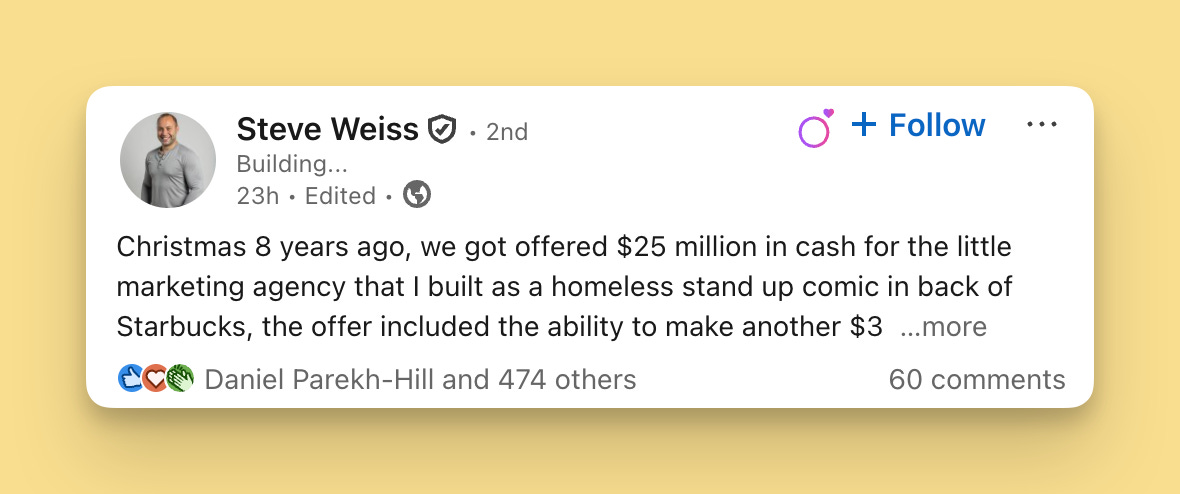
1. Christmas 8 years ago, we got offered $25 million in cash
Why this post?
This post went viral, receiving 474 likes in 23 hours. It received 21-58 times more engagement and views than Steve’s posts this week.
WHY THIS POST WENT VIRAL
This post combines two things people can’t resist: huge money and a counterintuitive decision.
BREAKDOWN
Massive hook: “$25 million in cash” - big numbers stop the scroll instantly
Underdog origin: “Homeless stand up comic in back of Starbucks” - extreme contrast makes the story compelling
Stakes get higher: Adds another $30 million potential on top - now it’s $55 million total he’s walking away from
The unexpected decision: Turned it down cold - creates tension because most people would take the money
Core message: “I just wanted to bet on myself” - simple, emotional, aspirational
Validates the risk: “I was right :)” - confirms the bet paid off without bragging.
TRY THIS
Lead with a specific, surprising number - it creates instant curiosity
Share your lowest moment to make your wins feel earned
Show the internal struggle, not just the outcome - doubt makes you relatable
TOGETHER WITH POSTHERO
Grow your audience faster on LinkedIn. With an AI-powered tool that helps you create content and grow on LinkedIn.
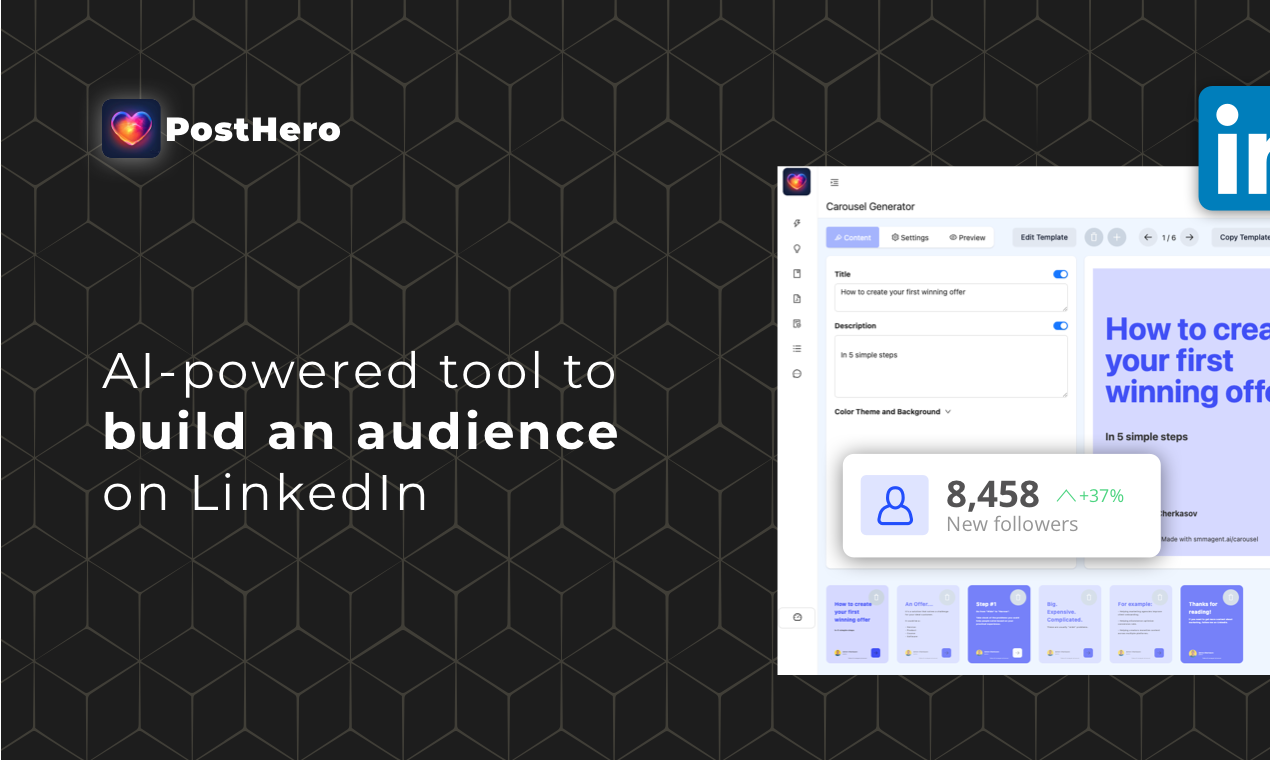
Create high-converting content that helps you grow on LinkedIn
Create a weekly content in 76 seconds
AI Voice assistant for creating content in seconds
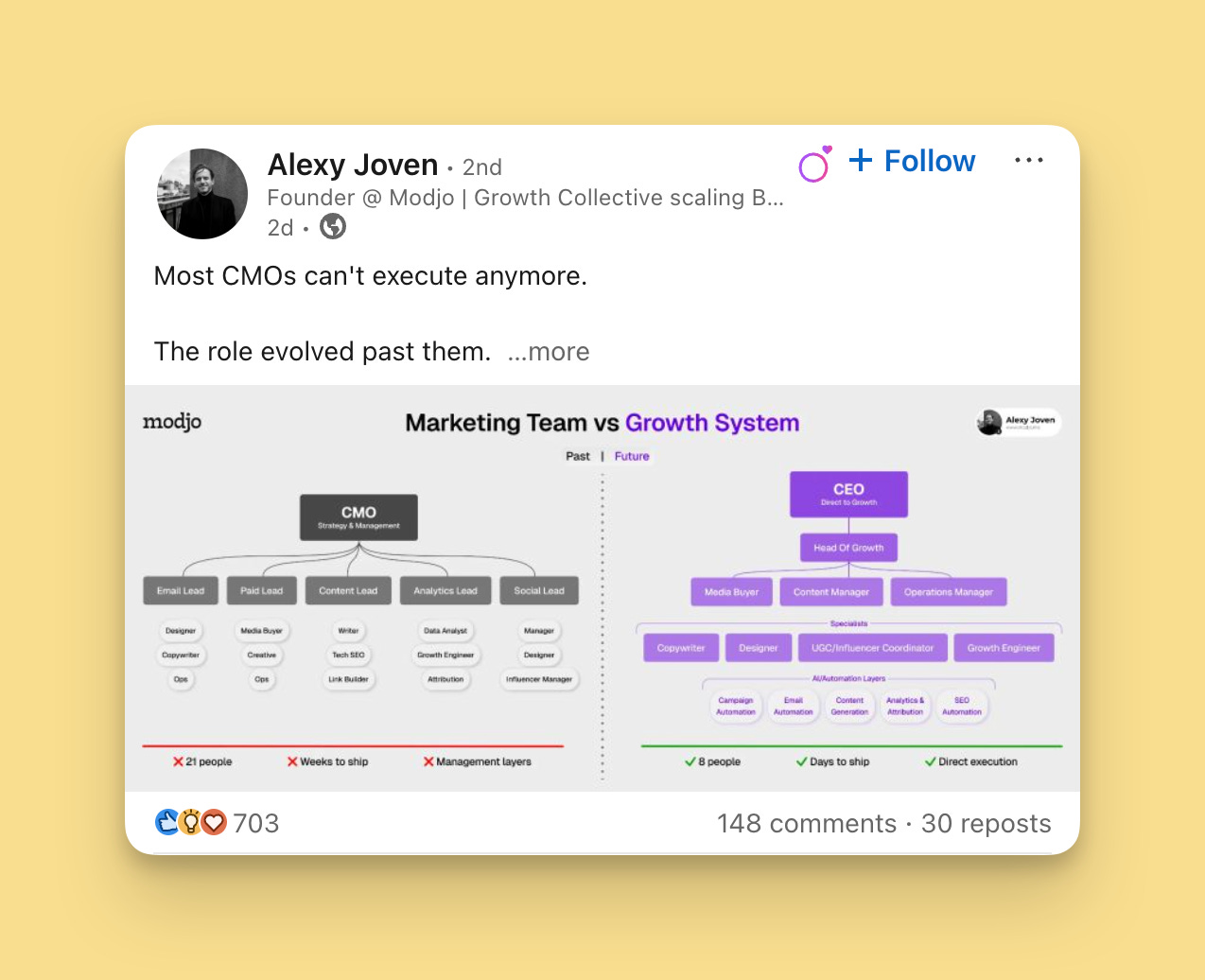
2. Most CMOs can’t execute anymore.
Why this post?
Another post that went viral this week - it got 703 likes in 2 days and performed 15-29 times better than Alexy’s previous content.
WHY THIS POST WENT VIRAL
This post challenges a title that thousands of people either hold, aspire to, or hire for. It’s spicy enough to spark debate but backed by a clear pattern anyone in startups has seen.
BREAKDOWN:
Controversial hook: “Most CMOs can’t execute anymore” - attacks a senior role directly, demands attention
Softens the blow: “Not because they’re bad. AI is changing everything.” - blames the system, not the person
Establishes credibility: “I work with 30+ companies a year” - shows pattern recognition from real experience
Shows the broken pattern: Hire CMO → months of prep → teams spin up → growth stalls → quiet exit - familiar story for founders
Explains the root cause: Good marketers get promoted to managing people, then stop building for 10 years
Tests the claim: Ask a CMO about AI workflows, modern tech stacks, AI SaaS GTM - they can’t answer
Bold prediction: Early-stage companies skip CMO hires in the next 24 months - gives a timeline
Offers the alternative: Head of Growth + specialists + lean team + AI tools - actionable replacement
TRY THIS
Challenge a well-known role or common practice - controversy drives engagement
Back up your take with pattern recognition from real work - “I’ve seen this 30 times”
Explain WHY the problem exists, not just THAT it exists - root cause analysis builds trust
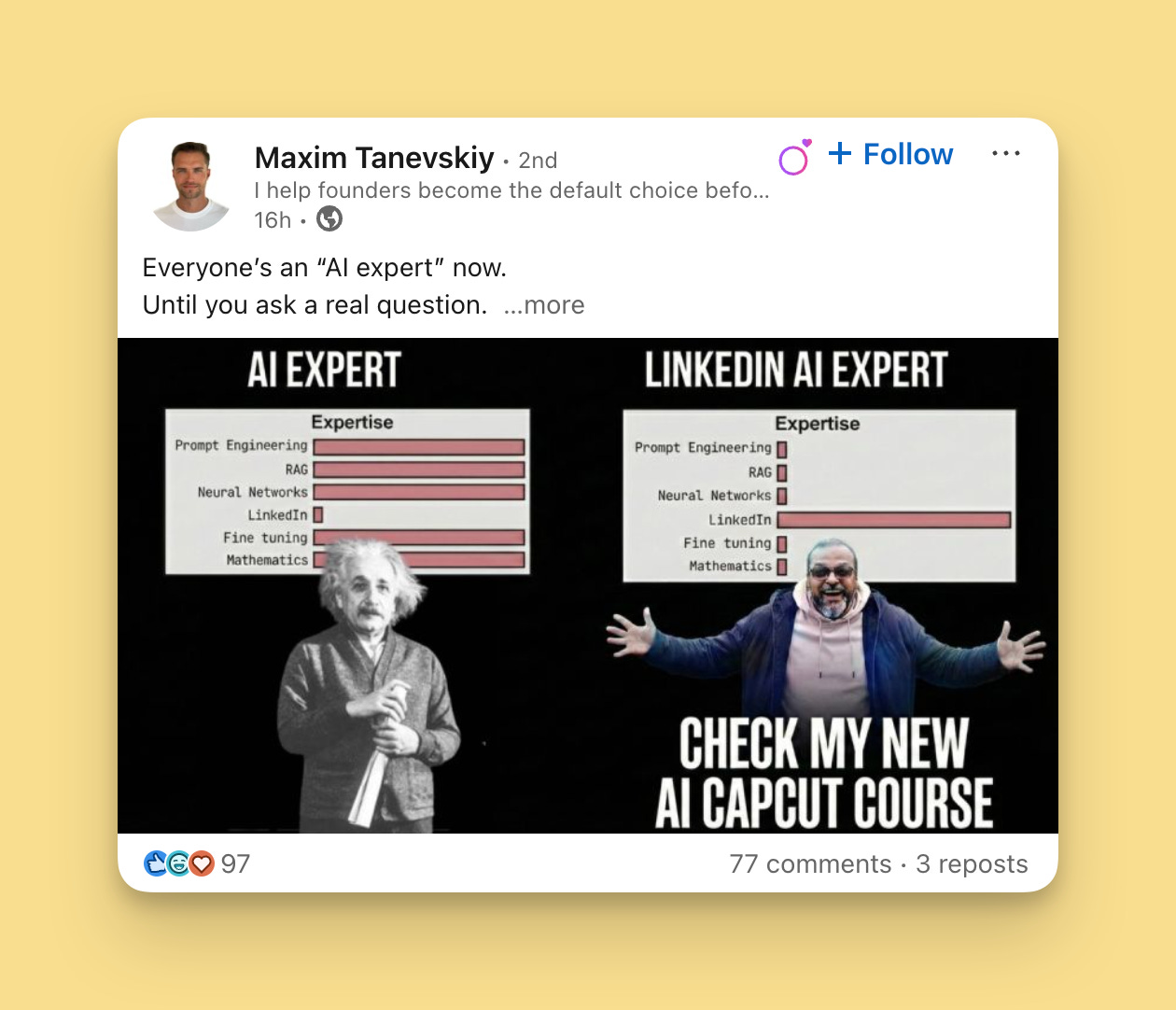
3. Everyone’s an “AI expert” now.
Why this post?
This post got 3 times more comments than Maxim’s other posts this week.
WHY THIS POST WENT VIRAL
LinkedIn is flooded with people calling themselves AI experts after watching a few tutorials. This post says what everyone is thinking but is too polite to say.
BREAKDOWN:
Sarcastic hook: “Everyone’s an ‘AI expert’ now” - calls out a trend everyone has noticed
Sharp re-hook: “Until you ask a real question“ - immediately separates real from fake
Defines the problem: “They’re not an expert, they’re a presenter“ - gives people language for what they’ve been feeling
Red flags list: Four specific signs of fake experts - makes it easy to spot them
Key insight: “Attention on LinkedIn is not the same as expertise“ - quotable truth bomb
Contrasts real vs fake: Real expertise is “boring on the surface” - mental models, constraints, business impact
TRY THIS
Call out a trend that’s annoying your audience - say what they’re thinking
Create a clear distinction between real and fake (expert vs presenter)
Give specific red flags people can use to evaluate others
LinkedIn Guide
The 4-Pillar Content System: A Simple Framework for Endless Content Ideas
You sit down to write. You open LinkedIn. You stare at the blank screen.
30 minutes later? Nothing.
Sound familiar?
Most people treat content like a guessing game. They wait for inspiration. They post random stuff. They hope something sticks.
That’s not a strategy. That’s a lottery ticket.
Today I’m sharing a framework that changed how I create content.
It’s called the 4-Pillar Content System.
Once you set it up, you’ll never run out of ideas again.
Why Most People Struggle with Content
Here’s the problem.
You try to be “creative” every time you sit down to write.
But creativity without structure is exhausting.
You end up posting once, then disappearing for two weeks. Or you post random thoughts that don’t connect to anything.
Your audience gets confused. They don’t know what you’re about.
And you burn out because every post feels like starting from zero.
The fix? A simple system that tells you exactly what to write about.
What Is the 4-Pillar Content System?
It’s a framework with three parts:
Your purpose statement
Your core insight
Your 4 content pillars
Let me break down each one.
Step 1: Your Purpose Statement
This is your anchor. One sentence that sums up what you do and who you help.
Every piece of content should connect back to this.
Examples:
“I help freelancers land clients without cold outreach.”
“I teach founders how to build in public.”
“I help marketers create content that actually converts.”
Keep it simple. If it takes more than one sentence, it’s too complicated.
Your purpose statement answers: “Why should anyone follow me?”
Step 2: Your Core Insight
This is the step most people skip.
And it’s the reason most content sounds the same.
Your core insight is your main belief that goes against common practice in your niche.
It’s the thing you see differently. The hill you’re willing to die on.
Everyone in your space is saying one thing. You’re saying the opposite. That’s your edge.
Examples:
Common practice: “Post every day to grow.”
Your core insight: “Posting 3x per week with high quality beats daily mediocre content.”
Common practice: “You need a big audience to make money.”
Your core insight: “100 true fans is enough to build a six-figure business.”
Common practice: “Hook your readers with clickbait.”
Your core insight: “Honest hooks outperform clickbait in the long run.”
Your core insight does three things:
It makes your content instantly recognizable
It attracts the right people (and repels the wrong ones)
It gives you a point of view to anchor every post
Ask yourself: “What do I believe that most people in my niche disagree with?”
That’s your core insight.
Step 3: Your 4 Content Pillars
Now you build your content engine.
These are the four types of content you’ll rotate through. Each pillar serves a different purpose. Together, they create a complete picture of who you are.
Pillar 1: Tactical
Actionable advice people can use right now.
Tips. How-tos. Frameworks. Step-by-step guides.
This is the stuff that makes people save your post.
Examples:
“How I write a LinkedIn post in 15 minutes”
“The 3-step system I use to find content ideas”
“My exact morning routine for deep work”
Tactical content proves you know what you’re talking about.
Pillar 2: Transformational
Stories of growth and transformation.
Paint a picture of what success looks like. Show people what’s possible.
This is the stuff that makes people want what you have.
Examples:
“How I went from 0 to 10K followers in 6 months”
“How my client landed her first $5K deal using this strategy”
“What changed when I finally started posting consistently”
Transformational content inspires people to take action.
Pillar 3: Insightful
Industry trends. Hot takes. Thought-provoking opinions.
This is where your core insight shines. Share how you see the world differently.
Examples:
“Why I think cold DMs are dead in 2025”
“The biggest mistake I see new creators make”
“Unpopular opinion: You don’t need a niche to grow”
Insightful content positions you as a thought leader.
Pillar 4: Personal
Anecdotes. Lessons learned. Behind-the-scenes moments.
This is the stuff that makes you human.
Examples:
“I almost quit last month. Here’s what happened.”
“What my dad taught me about business”
“The embarrassing failure that taught me everything”
Personal content builds trust and connection.
How to Put It All Together
Here’s the simple process:
Step 1: Write your purpose statement.
One sentence. Who do you help and how?
Step 2: Define your core insight.
What do you believe that goes against the norm? What’s your contrarian take?
Step 3: List 3 topics for each pillar.
That’s 12 topics total. Your content roadmap for weeks.
Step 4: Rotate through the pillars.
Don’t post 5 tactical posts in a row. Mix it up.
Monday: Tactical
Wednesday: Personal
Friday: Insightful / Aspirational
Step 5: Revisit quarterly.
Your pillars aren’t set in stone. Every 3 months, update your topics. Remove what’s stale. Add what’s resonating.
Why This Works
Three reasons.
You never start from zero.
When you sit down to write, you already know the category. You just pick a topic from your list and go.
Your content has a point of view.
Your core insight runs through everything. People know what you stand for.
Your audience knows what to expect.
They follow you because they know what you’re about. Not because you got lucky with one viral post.
Your Homework
Do this today:
Write your purpose statement (one sentence)
Define your core insight (what do you believe that others don’t?)
Create your 4 pillars with 3 topics each
Schedule your first 4 posts (one from each pillar)
40 minutes of work. Weeks of content ideas.
Stop guessing. Start systematizing.
The blank screen won’t beat you anymore.
That’s it for this week.
If you try the 4-Pillar System, reply and tell me how it goes. I’d love to hear what pillars you came up with.
See you next time.
That’s a wrap for today.
See you next week! If you want more LinkedIn tips, be sure to follow me on LinkedIn (link).
If you love this episode and want to support us, spread the word about us by sharing The LinkedIn Secrets with colleagues. I really appreciate it!
Thank you for reading!
What’d you think of today’s edition?
Help me to understand what you think about this episode. Just reply with a number (1, 2, or 3) to this email.
1 - Damn good
2 - Meh, do better
3 - You didn’t cook it
Your compadre,
Anton “LinkedIn growth strategies” Cherkasov