

Hi there,
I study the best LinkedIn strategies, so you can grow your audience and get clients.
In this issue, you’ll find:
The 5 ways to make expertise memorable (story, opinion, personality, real numbers, behind-the-scenes)
The one question to ask before you publish anything (“could AI have written this?”)
TOGETHER WITH POSTHERO
Grow your audience faster on LinkedIn. With an AI-powered tool that helps you create content and grow on LinkedIn.
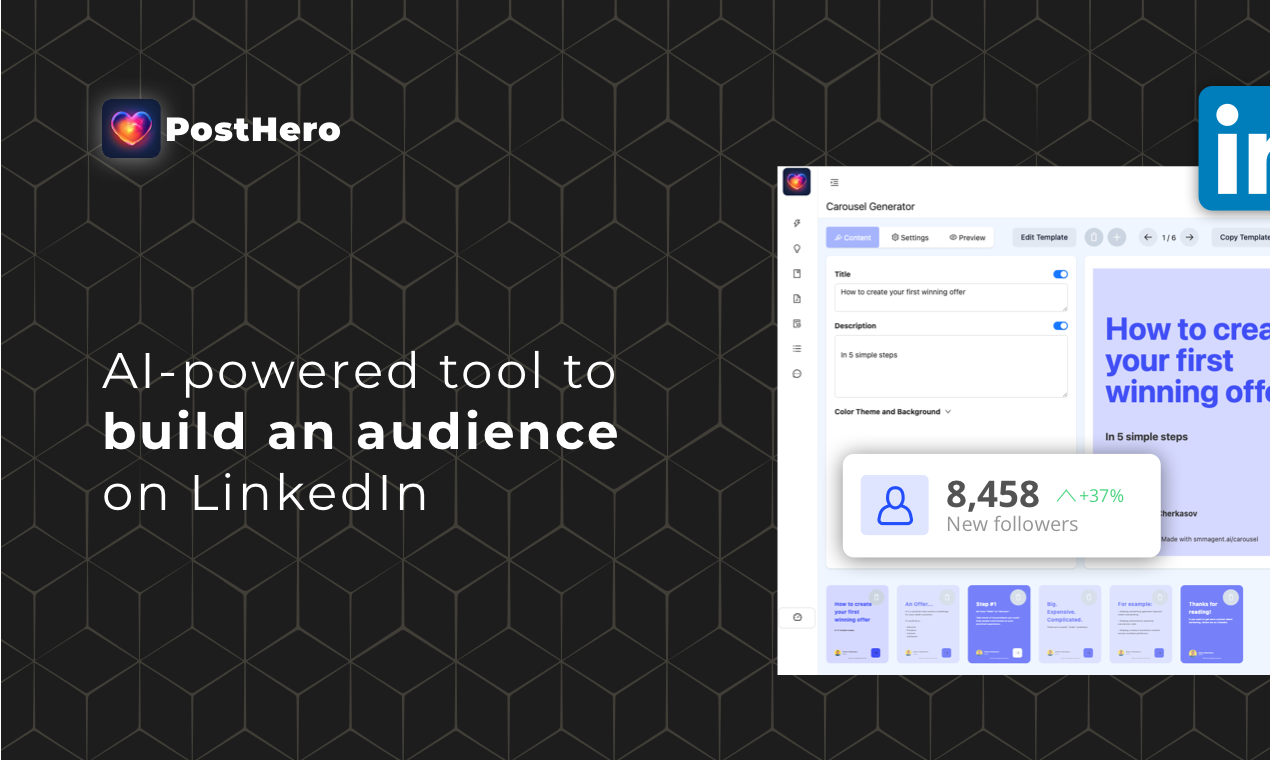
Create high-converting content that helps you grow on LinkedIn
Create a weekly content in 76 seconds
AI Voice assistant for creating content in seconds
Why “Expert” Content Is Making You Forgettable
Here’s something that changed in the last couple of years.
Expert tips used to be valuable. If you shared “5 ways to improve your email open rates,” people learned something they couldn’t easily get elsewhere.
Now? Anyone can type that into an AI and get a solid answer in 3 seconds.
Pure how-to content has become a commodity. The tips aren’t special anymore. The information is everywhere, instant and free.
So if your entire content strategy is “share useful tips,” you’ve got a problem. You’re competing with a machine that does it faster, and you blend into a sea of people posting the exact same advice.
The tips aren’t what makes you memorable anymore. They can’t be. Everyone has them.
What’s left is the stuff AI can’t replicate: your take, your story, your personality, your opinions. That’s the only real edge you have now.
Good news: you don’t have to stop sharing expertise. You just have to stop sharing it naked. Wrap it in the things that are uniquely yours.
Let me show you exactly how.
The Problem With “Naked” Expertise
Let’s look at what naked expert content looks like.
“5 tips to write better hooks:
Keep it short
Create curiosity
Make a bold claim
Use numbers
Ask a question”
Technically useful. Completely forgettable.
Why? Because it could’ve been written by anyone. Or anything. There’s no YOU in it. No reason to follow you specifically over the thousand others posting the same list.
It informs. But it doesn’t connect. And connection is what builds an audience and a business.
Now let me show you how to fix this. Same expertise, made memorable.
Fix 1: Wrap the Tip in a Story
The single most powerful move. Attach your expertise to something that happened to you.
Naked:
“Always follow up with leads. Most sales happen after multiple touchpoints.”
Wrapped in story:
“I lost a $5,000 client because I didn’t send one follow-up email. I assumed they weren’t interested. Three months later they hired a competitor. They’d been waiting for me to reach back out. Now I follow up religiously. Here’s my system...”
Same lesson. But now it’s yours. Nobody else has that story. AI can’t make it up. And it sticks, because people remember stories, not bullet points.
The formula: take your tip, then ask “when did I learn this the hard way?” Lead with that moment.
Fix 2: Attach a Strong Opinion
Don’t just share what to do. Share what you believe about it.
Naked:
“Posting consistency matters for growth.”
Wrapped in opinion:
“Posting daily is terrible advice. I’ve seen more people burn out from daily posting than succeed from it. 3 times a week beats 7 times a week every single time, and I’ll die on this hill. Here’s why...”
The information is similar. But the opinion makes it yours. It takes a side. It invites agreement or debate. It shows you actually think, instead of just reciting best practices.
AI hedges. It gives balanced, safe answers. A real opinion is the opposite of that. Which is exactly why it stands out now.
The formula: take your tip, then ask “what’s my controversial take on this?” Lead with the take.
Fix 3: Add Your Personality
Same facts, delivered in a voice only you have.
Naked:
“It’s important to engage with your audience in the comments.”
With personality:
“I spend way too much time in my comments. My girlfriend thinks I’m addicted. She’s not wrong. But that ‘addiction’ built half my business, so I’m keeping it.”
The point is the same. But now there’s a human in it. Humor. A real detail. A voice.
People don’t follow information. They follow people they find interesting. Your personality is the thing that makes someone pick you over the identical advice from someone bland.
The formula: write the tip, then rewrite it the way you’d actually say it out loud to a friend. Keep the jokes, the asides, the real details.
Fix 4: Use Specific, Real Numbers
Vague expertise sounds like everyone else. Specific, real numbers from your own experience can’t be faked.
Naked:
“Commenting can really grow your profile views.”
With your numbers:
“Last month I left 400 comments and almost never posted. My profile views went up 60%. From comments alone. Here’s exactly what I did...”
AI gives generic advice. It can’t give YOUR real results. Specific numbers from your actual experience prove you’ve done the thing, not just read about it.
The formula: wherever you have a vague claim, swap in a real number from your own life. 400 comments. 60%. $5,000. Specifics make it credible and make it yours.
Fix 5: Share the Behind-the-Scenes
Don’t just share the polished advice. Show the messy process behind it.
Naked:
“Batching content saves time.”
Behind-the-scenes:
“Every Sunday I sit down with a coffee, open my messy notes app full of half-ideas, and turn them into a week of posts in about 45 minutes. It’s chaotic. There’s a lot of deleting. But by the end I never have to think about what to post all week.”
The advice is “batch your content.” But showing YOUR actual process makes it real and specific to you. Nobody else has your exact workflow, your coffee, your messy notes.
The formula: instead of stating the best practice, narrate how you personally do it. The quirks are the point.
The Simple Rule
Here’s how to catch yourself posting naked expertise.
Before you publish, ask one question:
“Could AI have written this?”
If yes, it’s too generic. Add the thing that makes it yours: a story, an opinion, your personality, a real number, your actual process.
If no, if it could only have come from you and your experience, you’re good. That’s the content that stands out now.
The tips are a commodity. You are not.
Stop posting information anyone could get from a machine. Start posting the stuff only you could write.
Your Homework
This week, do this:
Look at your last 5 posts. Ask “could AI have written this?” Be honest about how many fail.
Take one flat, tip-only post. Rewrite it with a story from your own experience.
On your next post, add a real opinion. Take a side. Don’t hedge.
Swap one vague claim for a specific number from your own life.
Run every post through the test before publishing: could a machine have written this? If yes, add yourself.
Your expertise isn’t your edge anymore. Everyone has expertise now.
You are your edge. Start writing like it.
That’s it for this week.
If you rewrite a flat post into something only you could’ve written, reply and send me both versions. I’d love to see the difference.
See you next time.
That’s a wrap for today.
See you next week! If you want more LinkedIn tips, be sure to follow me on LinkedIn (link).
If you love this episode and want to support us, spread the word about us by sharing The LinkedIn Secrets with colleagues. I really appreciate it!
Thank you for reading!
What’d you think of today’s edition?
Help me to understand what you think about this episode. Just reply with a number (1, 2, or 3) to this email.
1 - Damn good
2 - Meh, do better
3 - You didn’t cook it
Your compadre,
Anton “LinkedIn growth strategies” Cherkasov