

Hi there,
I analyze thousands of viral LinkedIn posts, so your content performs better.
In this issue, you’ll find:
The 6 places your next post is already hiding (your DMs, your actual work, your old posts...)
Why the blank page isn’t an idea problem - it’s a capture problem
TOGETHER WITH POSTHERO
Grow your audience faster on LinkedIn. With an AI-powered tool that helps you create content and grow on LinkedIn.
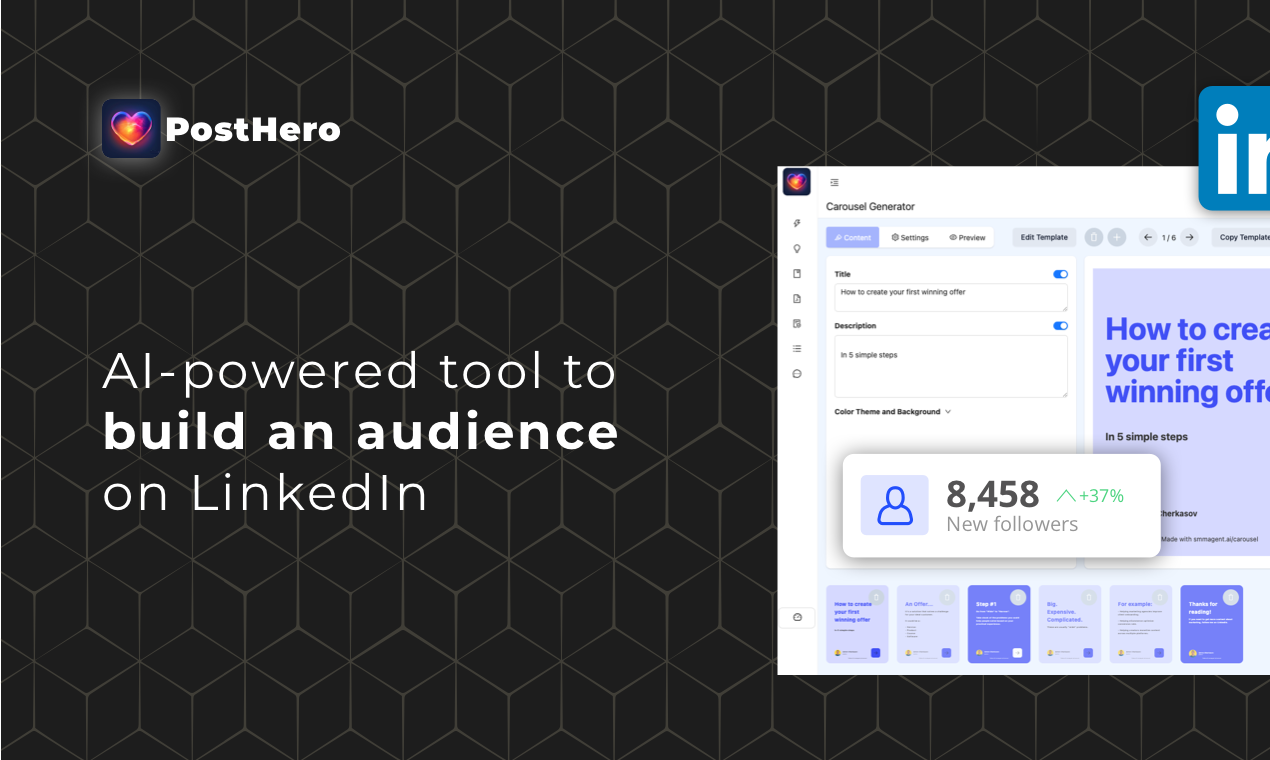
Create high-converting content that helps you grow on LinkedIn
Create a weekly content in 76 seconds
AI Voice assistant for creating content in seconds
What to Post When You Have Nothing to Say
You sit down to write a post.
Blank screen. Blinking cursor.
You think for a minute. Nothing good comes. You think for another minute. Still nothing.
“I’ve got nothing to say today.”
So you close the app. You skip posting. You tell yourself you’ll come up with something tomorrow.
I’ve been there. Everyone who posts has been there.
But here’s what I’ve figured out:
“I have nothing to say” is almost never true.
You have plenty to say. You just don’t recognize it as content yet.
The blank page isn’t an idea problem. It’s a noticing problem. And today I’ll show you exactly where to look when your mind goes blank.
Let’s fix this.
First, Lower the Bar
Here’s why you’re stuck.
You think every post needs to be brilliant. A big, original insight nobody’s ever shared. Something profound.
That pressure is what freezes you.
But look at the posts that actually do well. Most of them aren’t genius. They’re small.
One observation. One lesson. One moment. One simple tip.
That’s it.
You don’t need to reinvent your industry every time you post. You need to share one useful or interesting thing.
Drop the pressure to be brilliant. Aim to be helpful or real instead.
The moment you lower the bar, the ideas start showing up.
Now let me show you where they’re hiding.
Source 1: Your DMs and Comments
This is the best place to look. Always start here.
Think about the conversations you’ve had this week. In your DMs. In the comments. On calls.
Did anyone ask you a question?
That question is a post.
Did you explain something to someone? Give advice? Answer a “how do I...” message?
That answer is a post.
Here’s the logic: if one person asked you, hundreds of others are wondering the same thing. They just didn’t ask.
So take that private conversation and make it public.
You already did the hard part. You already thought through the answer. Now just write it up as a post.
Some of my best-performing content started as a reply in someone’s DMs. I answered one person, then realized everyone needed to hear it.
Your inbox is a content goldmine. Go dig.
Source 2: Your Actual Work
What did you do this week?
Not “what brilliant thoughts did you have.” What did you actually DO?
Solved a problem for a client?
Made a mistake and learned something?
Tried a new tool or process?
Wrestled with a tough decision?
Figured something out that used to confuse you?
All of that is content.
Here’s what people forget: your ordinary work is fascinating to people who don’t do it.
What feels boring and routine to you is new and useful to someone else. You’re an expert in your thing. Most people aren’t. Show them how you work.
You don’t need to invent ideas. Just narrate what you already did.
“Here’s a problem I solved this week and how I did it.”
Instant post. From your actual Tuesday.
Source 3: Your Old Posts
You have a backlog. Use it.
Go look at your posts from a few months ago. Especially the ones that did well.
You can:
Repost the best ones. Nobody remembers. New followers never saw them.
Update them. Add what you’ve learned since. “I wrote this 6 months ago. Here’s what’s changed.”
Flip them. Take the opposite angle. Argue the other side.
Expand them. Turn one point from an old post into a whole new post.
And here’s a specific trick: reuse hooks that worked.
If a hook stopped people before, it’ll stop people again. Take that proven first line and use it on a fresh topic.
Your old content isn’t used up. It’s a well you can keep drawing from.
Source 4: React Instead of Create
Here’s a mindset shift.
You don’t always need an original idea. You can respond to someone else’s.
Reacting is way easier than inventing from scratch.
Scroll your feed. Find a post in your niche. Then:
Agree and add. “This is spot on. Here’s what I’d add...”
Disagree and explain. “Everyone says this. I see it differently...”
Share a hot take. React to a trend or a common opinion in your space.
Someone else’s post becomes the spark for yours. You’re not staring at a blank page anymore. You’re responding to something that already exists.
Half the content on LinkedIn is people reacting to other content. Join in.
Source 5: The World Outside LinkedIn
Your best material usually doesn’t come from LinkedIn at all.
It comes from your actual life.
A line from a podcast that stuck with you
An idea from a book you’re reading
A conversation you had over coffee
A shower thought
Something that annoyed you today
A pattern you noticed in the world
Take any of these. Connect it back to your niche. That’s a post.
“I heard something on a podcast yesterday that applies perfectly to [your topic]...”
The trick is paying attention to your own life, then translating it for your audience.
The best creators aren’t idea machines. They’re just good at noticing and connecting.
Source 6: Fall Back on Formats
Still stuck? Use a template.
Some post formats work every time. When your brain is empty, let the format do the thinking.
Reliable ones:
The lesson learned. “Here’s something I learned the hard way...”
The mistake. “I used to do X. Here’s why I stopped...”
The younger-self post. “If I could tell my younger self one thing about [topic]...”
The simple how-to. “How to do [specific thing] in 5 steps...”
The list. “5 things I wish I knew about [topic]...”
You don’t have to invent the structure. Just plug your experience into a format that already works.
The format is the scaffolding. You just fill it in.
And if you want a head start, here’s 100+ viral LinkedIn templates you can pull from. Proven structures ready to go. Just pick one and drop your own experience in.
The Real Fix
Now here’s the honest truth underneath all of this.
The blank page problem isn’t really an idea problem.
It’s a capture problem.
Think about it. You HAD ideas all week. During that client call. Reading that post. In the shower. In that conversation.
You just didn’t write any of them down. So now, when you sit down to post, your mind is blank. All those ideas are gone.
The fix is simple: capture ideas the moment they hit.
Keep a running list. Notes app, a doc, whatever. Every time an idea shows up, dump it there. Raw. Messy. Doesn’t matter.
Then when it’s time to post, you don’t face a blank page. You open your list and pick something.
This is exactly why I use Posthero for this. I dump the raw thought in the moment I get it, and later it helps me turn that messy one-liner into an actual draft. The idea gets caught instead of lost.
Full disclosure, that’s my own tool. But the principle matters more than the tool: catch ideas when they come, and you’ll never face the blank page the same way again.
The people who “always have something to say” aren’t more creative than you.
They just capture what they notice. You let it slip away.
Your Homework
This week, when you feel stuck, do this:
Open your DMs and comments. Find one question someone asked you. Turn it into a post.
Think about your work this week. Pick one thing you did. Write about it.
Start a running idea list today. Capture every idea the moment it hits, so next week’s blank page never happens.
You don’t have nothing to say.
You just have to look in the right places.
That’s it for this week.
Next time you’re staring at a blank page, come back to this issue and run through the sources. One of them will unstick you. Reply and tell me which one worked.
See you next time.
That’s a wrap for today.
See you next week! If you want more LinkedIn tips, be sure to follow me on LinkedIn (link).
If you love this episode and want to support us, spread the word about us by sharing The LinkedIn Secrets with colleagues. I really appreciate it!
Thank you for reading!
What’d you think of today’s edition?
Help me to understand what you think about this episode. Just reply with a number (1, 2, or 3) to this email.
1 - Damn good
2 - Meh, do better
3 - You didn’t cook it
Your compadre,
Anton “LinkedIn growth strategies” Cherkasov