

Hi there,
I analyze thousands of viral LinkedIn posts, so your content performs better.
In this issue, you’ll find:
What’s getting throttled right now (”comment X for my freebie” posts and obvious AI content)
The 200-view post that made a sale (and the two-layer strategy behind it)
TOGETHER WITH POSTHERO
Grow your audience faster on LinkedIn. With an AI-powered tool that helps you create content and grow on LinkedIn.
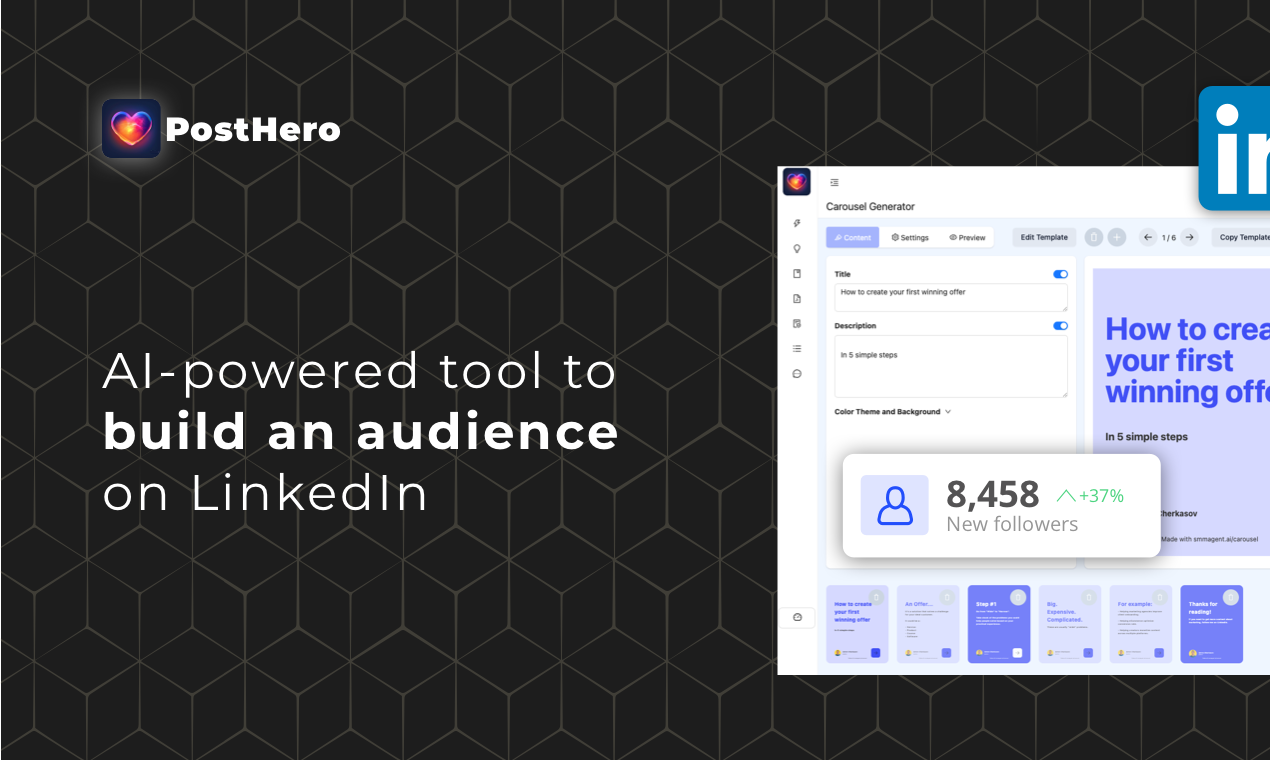
Create high-converting content that helps you grow on LinkedIn
Create a weekly content in 76 seconds
AI Voice assistant for creating content in seconds
LinkedIn Is Changing Its Algorithm Right Now (Here’s What’s Working)
Something’s happening on LinkedIn.
Views are down. Posts that used to do fine are getting buried. People are refreshing their analytics and wondering what they did wrong.
If your reach dropped recently, it’s probably not you.
The algorithm is shifting. Again.
Now, nobody outside LinkedIn knows exactly what’s going on. Predicting this platform is a fool’s game. But there are clear patterns showing up. And once you see them, you can adjust.
Let me tell you what’s dying, what’s working, and what to do about it.
What’s Getting Killed
Two things are taking a hit right now.
1. “Comment X and I’ll send it to you” posts
You know the format.
“Comment WORD and I’ll DM you my free guide.”
These lead magnet posts used to print reach. Everyone used them. They juiced the comment count, and the comment count juiced the algorithm.
Not anymore.
It looks like LinkedIn is onto the trick. A lot of people are seeing these posts get way less reach than usual (Bastian posted about it). The “comment X” play seems to be getting quietly throttled.
Makes sense if you think about it. Those comments aren’t real conversations. They’re just people typing a word to get a freebie. LinkedIn wants genuine engagement, not a keyword dump.
The gravy train on this one looks like it’s slowing down.
2. Obvious AI content
LinkedIn also seems to be fighting AI-generated posts.
The generic, could-be-anyone, clearly-written-by-a-robot content? It’s not getting the love it used to.
And this is the big clue. Because it tells you exactly what to do instead.
If AI content is getting suppressed, then the content AI CAN’T write becomes your advantage.
Which brings us to what’s actually working.
What’s Working: Type 1 - Personal Stories
This is your top-of-funnel play right now.
Personal stories are winning. And here’s why they’re bulletproof:
AI can’t write them.
AI can spit out “5 tips for productivity” all day. But it can’t tell YOUR story. It doesn’t know what you regretted at 25. It doesn’t know why you moved across the world. It doesn’t know what that one client taught you.
That’s your edge.
Here’s the format that’s working:
Start with a real personal story. Something that happened to YOU. Then weave your business or expert insight into it. End with a soft call to action.
Some examples:
“I’m 30 years old. I spent 6 years working with companies like X and Y. Here’s the one thing I regret most.”
“I moved from the US to Bali. Here’s how I actually run my business from a rice field.”
“I lost my biggest client last year. It ended up being the best thing that happened to my business.”
See the pattern?
You lead with the human story. The lesson comes wrapped inside it. And because it’s YOUR story, nobody else can copy it and AI can’t fake it.
The advice is still there. You’re still positioning yourself as an expert. But you’re delivering it through a story instead of a boring listicle.
Soft CTA at the end. Nothing pushy. Just a gentle nudge (you can still get leads from personal stories with the right CTA).
This is what gets reach right now.
What’s Working: Type 2 - Deep Niche Expertise
The second type is different.
It won’t get you huge reach. But it might get you clients. And that’s the whole point.
This is ultra-specific, expert-level content for your exact niche.
Not “here are some marketing tips.”
But: “I’m a marketing consultant for DTC brands with 10 years of experience. Here’s exactly what I’d do if I had to start a brand from scratch today.”
Or: “Here’s the exact process I use with my e-commerce clients to fix their email flows.”
Deep. Detailed. Specific. Written for one type of person who has one type of problem.
This content doesn’t go viral. Most people scrolling won’t care. And that’s fine.
Because the people who DO care are your ideal clients. And they don’t just read it. They act on it.
The 200-View Post That Made a Sale
Here’s the thing that proves the point.
My friend recently posted this kind of deep niche content. The post got 200 views. Two hundred. That’s it.
By vanity metrics, a total flop.
But from those 200 views, he made a sale for his community program.
Not a lead. A sale.
Think about that. A post most people would call a failure directly made money.
Because the 200 people who saw it were the RIGHT 200 people. And the content was specific enough to make one of them say “this person clearly knows my exact problem. I’m in.”
This is what everyone misses.
Reach is a vanity metric. Revenue isn’t.
A post with 200 targeted views can outperform a post with 20,000 random ones. Every time.
The Two-Layer Strategy
So here’s how you put it together.
You need both types of content working together.
Personal stories = top of funnel. These get reach. They pull new people in. They grow your audience and build your brand. This is how strangers discover you.
Deep niche expertise = bottom of funnel. These don’t get much reach. But they convert. They turn the right viewers into leads and sales. This is how your audience becomes clients.
Stories bring people in. Expertise converts them.
Run both. Lead with stories to grow. Sprinkle in deep expert posts to sell.
Most people only do one. They either tell stories and never convert, or they post dry expertise and never grow.
Do both, and you’ve got a full engine.
Don’t Panic About the Changes
One last thing.
Every time LinkedIn changes its algorithm, people freak out. They think the platform is dying. They think they’re being punished.
Relax.
Algorithm changes are normal. They happen constantly. And they always reward the same thing in the end: real, valuable, human content.
The people who panic and quit lose. The people who adjust and keep showing up win.
This change is actually good news if you’re willing to be human. It punishes the shortcuts and the AI slop. It rewards the people telling real stories and sharing real expertise.
That can be you. Starting this week.
Your Homework
This week, do this:
Write one personal story post. Start with something real that happened to you. Weave in a business lesson. Soft CTA at the end.
Write one deep niche post. Pick your exact ideal client and one specific problem. Go deep. Don’t worry about reach.
Watch what happens. The story post should pull reach. The niche post might just pull a lead.
The algorithm changed. So change with it.
Be human. Be specific. Keep showing up.
That’s it for this week.
If your views dropped recently, reply and tell me what you’re seeing. I’m tracking these changes closely and I’d love to compare notes.
See you next time.
That’s a wrap for today.
See you next week! If you want more LinkedIn tips, be sure to follow me on LinkedIn (link).
If you love this episode and want to support us, spread the word about us by sharing The LinkedIn Secrets with colleagues. I really appreciate it!
Thank you for reading!
What’d you think of today’s edition?
Help me to understand what you think about this episode. Just reply with a number (1, 2, or 3) to this email.
1 - Damn good
2 - Meh, do better
3 - You didn’t cook it
Your compadre,
Anton “LinkedIn growth strategies” Cherkasov