

Hi there,
I study what performs on LinkedIn to help you write content that lands.
What’s hot this week: OpenClaw is still trending. More and more people are posting tips and use cases for creating LinkedIn content with it.
OpenClaw is the most advanced AI assistant framework, and you can try it without code using this 1-click setup on ClawPlane.
In this issue, you’ll find:
7 writing rules I’ll never break (and why they work)
TOGETHER WITH POSTHERO
Grow your audience faster on LinkedIn. With an AI-powered tool that helps you create content and grow on LinkedIn.
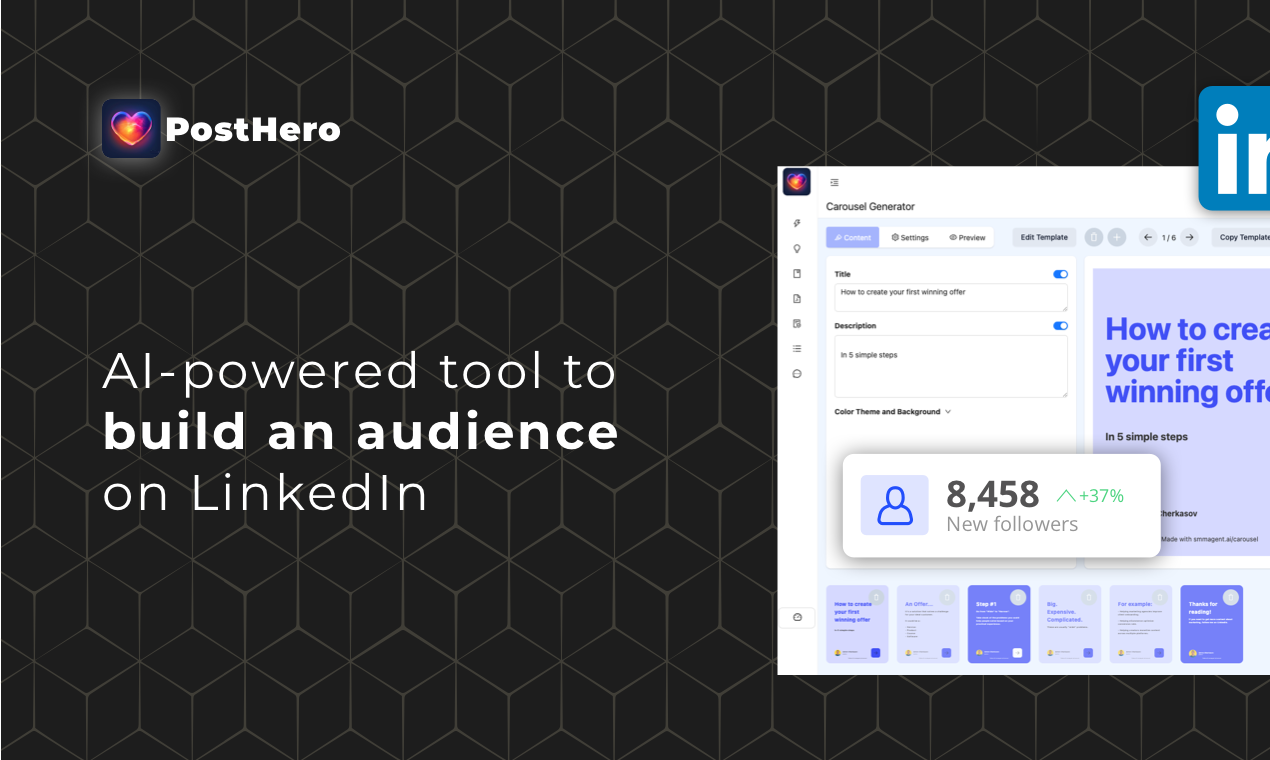
Create high-converting content that helps you grow on LinkedIn
Create a weekly content in 76 seconds
AI Voice assistant for creating content in seconds
7 writing rules I’ll never break (and why they work)
I’ve written hundreds of LinkedIn posts.
Some flopped. Some went viral. Most landed somewhere in between.
But over time, I noticed patterns.
The posts that performed well? They all followed certain rules.
The posts that flopped? They broke those rules.
After years of writing, I now have a set of non-negotiable rules. I never break them. Ever.
These aren’t fancy tricks. They’re fundamentals.
But fundamentals win games.
Here they are.
Rule 1: Always Make Your Hook a One-Liner
Your first line is everything.
It determines whether someone clicks “see more” or keeps scrolling.
One line. One idea. One punch.
Bad: “I’ve been thinking a lot lately about the importance of consistency and how it affects our ability to grow on LinkedIn and build a personal brand over time.”
Good: “I almost quit LinkedIn last month.”
See the difference?
The first one is a paragraph pretending to be a hook. The second one is a hook.
Short. Punchy. Creates curiosity.
One line. That’s the rule.
Rule 2: First 3 Lines = Outline Your Entire Post
Most people bury the value.
They start with a long intro. Then some context. Then more setup.
By the time they get to the point, the reader is gone.
Flip it.
Your first 3 lines should tell people exactly what they’re getting.
Think of it as an outline:
Line 1: Hook (grab attention) Line 2-3: Re-hook (make a promise, set up what’s coming)
If someone only reads your first 3 lines, they should know what the post is about and why they should keep reading.
Don’t make them guess. Tell them.
Rule 3: Use Listicles for Steps
When you’re explaining a process, use a numbered list.
Not because it’s trendy. Because it works.
Lists are:
Easy to scan
Easy to follow
Easy for AI to parse (good for SEO)
Easy to remember
“Here are 5 ways to improve your hooks.”
That’s clearer than burying the 5 ways in paragraphs of text.
When in doubt, list it out.
Rule 4: Never Start Posts With “Stop,” “Don’t,” or “Quit”
This one surprised me at first.
But it’s true.
Starting with negative words puts people in a defensive mindset. They feel attacked. They resist.
“Stop making this mistake.” “Don’t do this on LinkedIn.” “Quit posting boring content.”
These hooks feel aggressive. Even if the advice is good, people bounce.
Instead, flip to positive framing.
“Here’s a better way to do X.” “Try this instead of X.” “What if you did X differently?”
Same message. Different energy.
Invite people in. Don’t push them away.
Rule 5: Add Signposting
This is one of the most underrated writing techniques.
Signposting means showing your credibility naturally within your content.
Not bragging. Not flexing. Just... context.
Bad (no signposting): “Here’s how to write better hooks.”
Good (with signposting): “After writing 500+ LinkedIn posts and working with dozens of clients, here’s what I’ve learned about hooks.”
See the difference?
The second one tells the reader: “This person has experience. They’ve done the work. I should listen.”
You’re not saying “I’m an expert!” You’re showing it through context.
Weave your experience into your content. Let people know why you’re qualified to teach this.
Rule 6: Keep It Short. Make It Choppy.
Too much copy? Cut it.
Long sentences? Break them up.
Big paragraphs? Split them.
LinkedIn is a scrolling platform. People skim.
If your post looks like a wall of text, nobody reads it.
White space is your friend.
Short paragraphs. Short sentences. Choppy rhythm.
It’s not how you learned to write in school. But it’s how you write for attention.
Rule 7: Always End With a Question or Info in the P.S.
Your ending matters.
Most people just... stop. The post fizzles out.
Don’t do that.
Two ways to end strong:
Option 1: Ask a question.
“What’s a writing rule you swear by?”
“Have you tried this? Let me know below.”
“Which of these surprised you?”
Questions invite comments. Comments boost reach. Reach brings followers.
Option 2: Add a P.S. with extra value.
“P.S. I’m hosting a free workshop on this next week. Link in comments.”
“P.S. If you found this helpful, repost it for your network.”
“P.S. Save this post. You’ll need it later.”
The P.S. is prime real estate. Use it.
Bonus Rule: Never Bait and Switch
This one’s important.
Bait and switch = start with a cool story, then pivot to selling something unrelated.
“I climbed Mount Everest last year. It was the hardest thing I’ve ever done.
Anyway, here’s why you should buy my LinkedIn course.”
What?
The reader feels tricked. They came for the mountain story. They got a sales pitch.
Trust destroyed. Instantly.
If you’re going to sell, connect it to your content naturally. Or don’t sell at all in that post.
Never trick your reader. They won’t forget it.
Why These Rules Work
These aren’t arbitrary.
They’re based on how people actually read on LinkedIn.
People scroll fast. They skim. They have short attention spans.
Your job is to:
Stop their scroll (hook)
Keep them reading (structure)
Make it easy to consume (short and choppy)
Give them a reason to engage (question or P.S.)
Not break their trust (no bait and switch)
Follow these rules and your posts will perform better. Guaranteed.
The “Read It Out Loud” Test
Here’s how I check my posts before publishing.
I read them out loud.
If I stumble on a sentence, it’s too long. I cut it.
If something sounds awkward, I rewrite it.
If I get bored reading it, I know others will too.
Your writing should sound like you’re talking to a friend.
Natural. Conversational. Easy.
If it sounds like a textbook, rewrite it.
Your Homework
This week, try this:
Write your next post using all 7 rules.
Check your hook. Is it one line? Does it grab attention?
Check your first 3 lines. Do they outline the post?
Check your structure. Is it scannable? Are there lists where needed?
Check your ending. Is there a question or P.S.?
Read it out loud. Does it flow?
Publish and see what happens.
I promise you’ll notice the difference.
That’s it for this week.
If you have a writing rule you swear by, reply and share it. I’m always looking to add to my list.
See you next time.